Choosing the right Cross Roller Ring supplier requires more than comparing catalog prices. Global buyers need stable accuracy, dependable production, and clear technical communication. In 2026, supplier evaluation should connect engineering data with practical factory experience. A ring may look excellent on paper, yet perform poorly under uneven loads or improper preload.
This guide examines leading suppliers through measurable criteria. These include radial and axial rigidity, rotational accuracy, service life, sealing options, material quality, and customization capability. It also considers inspection records, batch traceability, packaging methods, and international delivery performance. A well-prepared supplier should explain tolerance values clearly and provide drawings that match the delivered product. Ask for test reports.
Real-world details matter. A protected bearing should arrive with clean surfaces, sealed packaging, and readable identification labels. Export cartons should resist moisture during long ocean shipments. Communication speed also matters when a machine stops unexpectedly. Still, supplier rankings are not permanent. Production capacity, pricing, certifications, and lead times can change during the year. Some published claims may require independent verification.
That deserves attention.
This overview is designed for equipment manufacturers, automation companies, robotics integrators, and industrial distributors. It balances technical capability with purchasing reliability. The strongest candidates should demonstrate consistent inspection practices, responsive engineering support, and a realistic understanding of application limits. Buyers should compare evidence, not promises, before approving a long-term supply relationship.
Cross Roller Rings: Definition, Structure, and Operating Principles
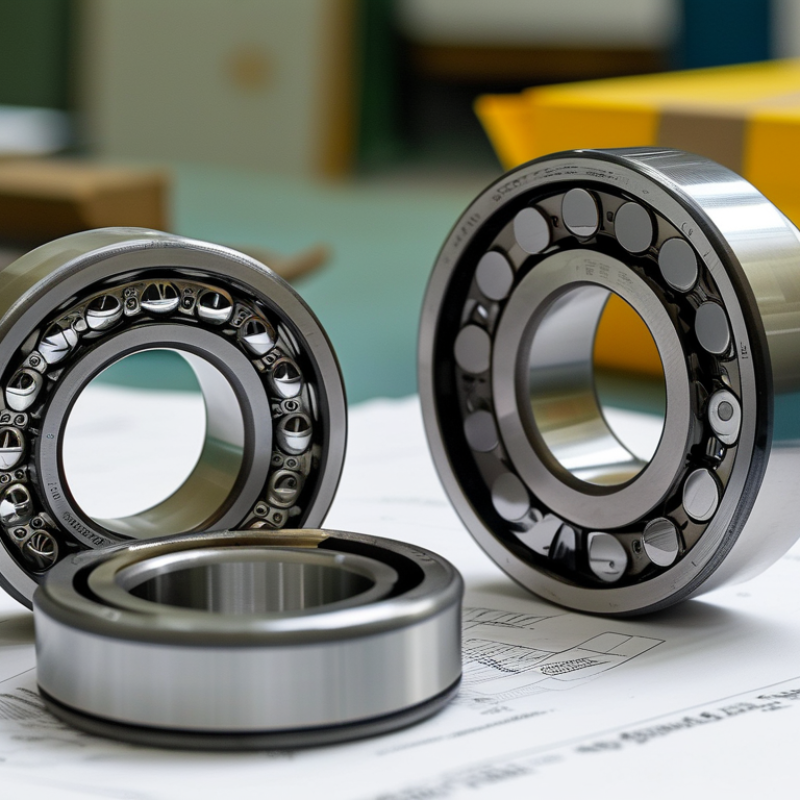
Cross roller rings are compact rotary bearings designed to carry radial, axial, and moment loads in one assembly. Their inner and outer rings contain precision-ground V-shaped raceways. Cylindrical rollers sit between them, with neighboring rollers arranged at 90 degrees. This crossed layout spreads load in multiple directions while limiting rotational runout. It is not simply a smaller ball bearing.
A typical ring includes inner and outer raceways, rollers, spacers or retainers, seals, and mounting holes. Controlled preload removes internal clearance and improves stiffness. However, excessive preload can increase friction, heat, and starting torque. That trade-off is often underestimated.
During operation, the ring rotates as each roller travels along its raceway. Load transfers through narrow contact lines, creating high rigidity in a small radial envelope. Clean assembly matters. Even a small metal particle can mark the raceway and create visible indexing error. ISO 281 provides a basis for bearing life calculations, but real service conditions still require judgment.
The International Federation of Robotics reported 553,052 industrial robot installations in 2022 and 541,302 in 2023. Its World Robotics 2024 report also recorded about 4.28 million robots operating worldwide. This expanding automation base increases demand for compact, repeatable rotary supports. Yet the report does not prove cross roller ring demand directly. Selection still depends on moment load, speed, preload, lubrication, mounting accuracy, and duty cycle. Test data should challenge catalog assumptions.
Key Specifications Global Buyers Should Compare
2026 Best Cross Roller Ring Suppliers for Global Buyers
Global buyers should compare specifications before comparing prices. A cross roller ring needs the correct bore, outside diameter, and mounting pattern. These dimensions determine whether it fits the machine frame without costly redesign. Check radial load, axial load, and moment load ratings separately. One impressive number cannot describe total performance.
Runout and rotational accuracy matter in inspection equipment, robotic joints, and indexing tables. Ask for preload values, starting torque, and expected service life under your actual duty cycle. Excessive preload may improve stiffness, but it can also increase heat and motor demand. Materials and heat treatment deserve equal attention. Hardened raceways, suitable rollers, and controlled surface finishes support stable operation.
Do not overlook sealing and lubrication. Dust, moisture, and frequent cleaning can shorten bearing life. Request grease type, relubrication guidance, temperature limits, and storage conditions. Reliable suppliers should provide dimensional reports, load calculations, tolerance data, and traceable inspection records. Lead time, packaging, replacement availability, and technical response should also be compared. A low purchase price can still become expensive. We have learned that catalog accuracy is not enough; application testing often reveals unexpected torque or mounting errors. Some suppliers may offer excellent documentation but limited customization. That weakness should be discussed openly before approval.
2026 Best Cross Roller Ring Suppliers for Global Buyers
Global buyers should compare cross roller rings by load capacity, rotational accuracy, and allowable speed rather than price alone. The reference values below represent typical specification ranges used for industrial precision positioning applications; actual performance depends on ring size, roller diameter, preload, lubrication, and mounting accuracy.
How to Evaluate Cross Roller Ring Suppliers in 2026
How to Evaluate Cross Roller Ring Suppliers in 2026
Global automation demand makes supplier evaluation less forgiving. The International Federation of Robotics reported 541,302 industrial robot installations in 2023. This growth increases demand for precise rotary motion components. Buyers should examine radial runout, axial runout, preload stability, and rated life data. Ask for inspection records from the actual production batch. Catalogue figures alone are not enough.
ISO 281
provides a recognized method for calculating bearing life, but calculations depend on real loads, speed, lubrication, and contamination. Request the supplier’s assumptions. Compare them with your application conditions. Grand View Research’s 2024 bearing analysis projects an 8.5% compound annual growth rate through 2030. Rising demand may pressure factories to shorten inspection time. That possibility deserves attention.
Look for documented process control, material certificates, heat-treatment records, and calibration dates. ISO 9001 certification supports system discipline, yet it does not guarantee excellent cross roller rings. Check sample consistency instead. A practical audit should measure several rings, not one impressive sample. Review delivery history, replacement procedures, and technical response times. I would also test a small batch before approving volume orders. Price still matters, but low quotations can hide unstable preload or weak traceability. Sometimes, the cheapest ring becomes the most expensive delay.
Quality Standards, Certifications, and Customization Options
For global buyers, a reliable cross roller ring supplier should prove quality through measurable records, not attractive promises. ISO 9001 certification supports controlled production, but it does not guarantee every bearing performs perfectly. Ask for material certificates, dimensional inspection reports, raceway hardness data, and batch traceability. A useful report should show radial runout, preload, rotational torque, and rated load values.
Certification requirements vary by application and destination market. Suppliers may need RoHS or REACH documentation for restricted substances, along with export packaging records and a certificate of conformity. Check whether each document matches the actual production batch. I have seen paperwork that looked complete but lacked a clear lot number. That detail deserves attention.
Customization can include bore diameter, mounting-hole patterns, flange geometry, seals, preload levels, lubrication, and corrosion-resistant materials. For robotic joints, low friction and repeatable positioning may matter most.
Semiconductor equipment may require cleaner grease, tighter runout, and controlled packaging. Industrial turntables often need stronger load capacity and simplified maintenance. Request a sample inspection before approving mass production.
Test it under realistic speed, temperature, and mounting conditions. Small errors become expensive later. Suppliers should also explain lead times, change-control procedures, replacement support, and inspection responsibility. A thoughtful technical discussion often reveals more than a standard catalog.
Pricing, Logistics, and After-Sales Support Considerations
When evaluating cross roller ring suppliers, compare landed cost, not unit price.
A low quotation may exclude preload adjustment, inspection, export packaging, or insurance. Request a line-item quote covering bearing size, accuracy grade, lubrication, lead time, Incoterm, and payment terms. Cheap quotes mislead. The World Bank’s Logistics Performance Index 2023 scored countries from 1 to 5, with global logistics performance varying widely across customs, infrastructure, tracking, and timeliness. That gap can change delivery risk more than a small price discount.
Shipment planning needs practical detail.
Cross roller rings require rigid packaging, moisture control, and clear orientation marks. UNCTAD’s Review of Maritime Transport reports that shipping carries over 80% of global merchandise trade by volume, so port congestion and schedule changes remain relevant. Ask suppliers for production milestones, container or air-freight options, and a contingency route. A 10-day delay can disrupt assembly more severely than a five-percent freight increase. Yet buyers sometimes overpay for speed without checking actual installation dates.
After-sales support should be measurable.
Require documented runout, preload, hardness, and dimensional inspection results for each batch. Define response times for technical questions and nonconforming parts. Warranty terms should explain evidence requirements, return freight, replacement timing, and field-service responsibility. ISO 9001 certification can indicate controlled processes, but it does not guarantee bearing performance. That distinction matters. My practical concern is often overlooked: suppliers may promise rapid support, then lack local stock or trained engineers. Test this before purchase with a sample failure report and a technical call.
Conclusion
This guide helps global buyers understand how a Cross Roller Ring delivers precise rotary motion through crossed cylindrical rollers arranged between raceways. It explains the ring’s structure, load distribution, rigidity, accuracy, friction, rotation speed, allowable moment, and service life, enabling purchasers to compare specifications according to their equipment requirements.
The article also presents a practical framework for evaluating suppliers in 2026, including manufacturing capability, inspection procedures, quality standards, certifications, customization support, and technical communication. Buyers will learn how to assess pricing beyond the unit cost by considering tooling, minimum order quantities, packaging, shipping, import procedures, lead times, warranty terms, spare parts, and after-sales assistance. By reviewing these factors together, companies can select reliable supply partners, reduce operational risks, and obtain Cross Roller Ring solutions that balance performance, cost, delivery efficiency, and long-term support.
 Manchen Transmission
