Choosing the right Concentrated Solar Power Plant supplier in 2026 requires more than comparing advertised capacity. Project owners must examine engineering depth, field performance, financial stability, and long-term service support. A supplier may offer impressive heliostat numbers, yet struggle with desert dust, thermal storage losses, or delayed commissioning.
This guide evaluates leading suppliers through practical project criteria. These include solar-resource assessment, receiver design, molten-salt storage, turbine integration, and grid compatibility. It also considers operating experience across different climates. A reliable supplier should provide clear performance guarantees, realistic construction schedules, documented safety procedures, and accessible replacement parts. Site visits, reference projects, and independent technical reviews can reveal details that brochures often omit.
The strongest supplier is not always the largest. A smaller specialist may respond faster and customize control systems more effectively. However, limited manufacturing capacity can create supply risks. Public information is also uneven, so some comparisons remain imperfect. Buyers should verify production data, warranty terms, degradation assumptions, and local regulatory compliance before making decisions. This article highlights potential leaders while recognizing that project success depends on location, financing, transmission access, and operations expertise. Even a well-designed plant can underperform if maintenance teams lack training or weather data is poorly modeled. Careful due diligence remains essential.
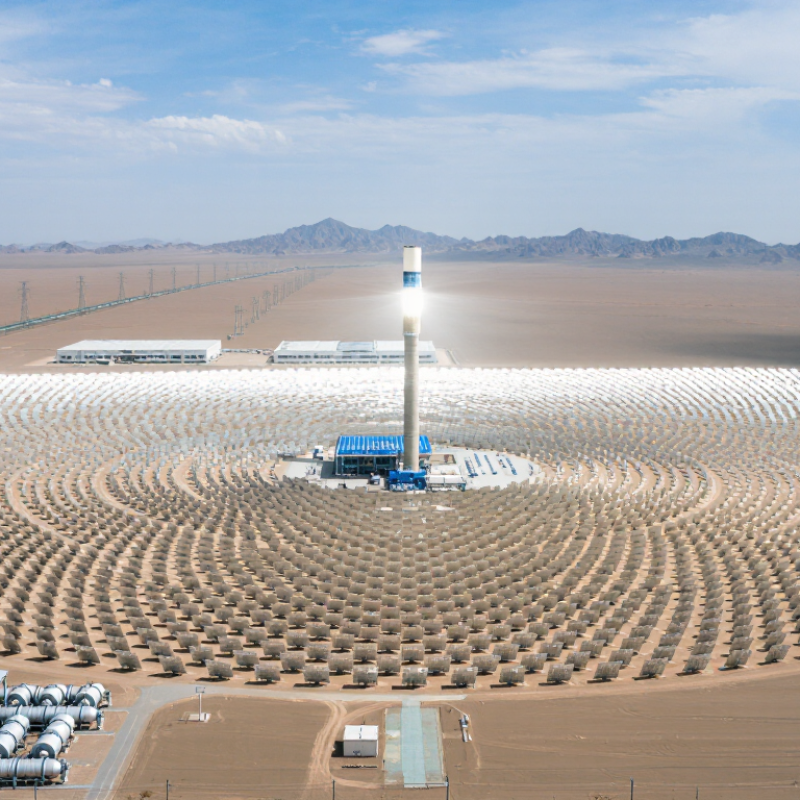
CSP Technology Map: Trough, Tower, Fresnel, and Dish Systems
Choosing the best concentrated solar power plant supplier in 2026 requires more than comparing advertised efficiency. The technology map matters. Parabolic trough systems use curved mirrors and heated fluid flowing through long receiver tubes. They suit large, sunny sites with steady thermal demand. Their design is familiar, but heat losses can rise across long piping networks.
Central tower systems focus sunlight onto a receiver above a mirror field. They can reach higher temperatures and support efficient thermal storage. However, tower alignment, receiver maintenance, and wind exposure require careful engineering.
Linear Fresnel systems use flat or slightly curved mirrors. They usually need less structural material and simpler installation. Their lower optical concentration may limit performance in some locations. It is a practical option, not a universal answer.
Dish systems concentrate sunlight onto a compact receiver, often with a small power block. They offer strong efficiency at modular scale, yet tracking accuracy and maintenance access can become difficult.
Supplier evaluation should include measured field data, storage integration, spare-parts planning, and local technical support. Ask for performance results under dust, wind, and seasonal temperature changes. Real sites are rarely perfect. A supplier may present impressive peak output, while annual production tells a different story. I would also inspect control systems and cleaning methods before signing a contract. Small maintenance delays can quietly reduce revenue.
Global CSP Baseline: More Than 7 GW Installed and 5–15 Hours of Storage
The global concentrated solar power market now has more than 7 GW installed, creating a practical baseline for 2026 supplier selection. This capacity includes tower, trough, and integrated thermal storage projects. A serious supplier should explain its technology clearly. It should also provide evidence from operating plants, not only laboratory results.
Storage duration is a major dividing line. Many modern CSP projects target five to fifteen hours of dispatchable energy. Five hours may support evening demand after sunset. Longer storage can cover overnight periods and improve grid flexibility. However, storage hours alone do not prove project quality. Buyers should examine annual efficiency, heat-loss rates, maintenance records, and molten-salt operating data. Small details matter. For example, insulation performance can affect overnight output during colder months.
Experienced project teams usually offer measurable guarantees for availability, output, and degradation. They should describe commissioning procedures, emergency controls, corrosion management, and worker training. Independent performance testing adds credibility. Financial strength also matters because a plant may operate for several decades. Still, public capacity figures can be imperfect. Some projects report nameplate capacity, while others reflect actual operating output. That difference deserves careful review. A supplier with strong references may still present assumptions that require challenge. Buyers should request site-level evidence, realistic weather models, and a transparent plan for spare parts.
Supplier Metrics: Thermal Efficiency, DNI, CAPEX, and 100–200 MW Scale
Choosing a concentrated solar power supplier in 2026 requires more than comparing headline capacity. For a 100–200 MW plant, thermal efficiency should be reported with clear boundaries: solar-to-thermal, thermal-to-electric, and net plant efficiency. A quoted 42% figure may describe ideal conditions, not annual operation. Ask for independently verified performance data, heat-loss measurements, and availability records from comparable projects. Real expertise appears in the details. For example, storage temperature, turbine load, and cooling design can change output during a hot afternoon.
Direct normal irradiance, or DNI, must match the proposed site. A strong design may require annual DNI above 2,000 kWh/m², but local dust, humidity, and cloud patterns still matter. CAPEX should include mirrors, receivers, thermal storage, grid connection, land preparation, and contingency allowances. Excluding these items creates a misleading comparison. For 100–200 MW projects, request costs in dollars per kilowatt and a separate storage cost curve. Compare fixed and variable operating costs over at least 25 years. Small assumptions become expensive.
I once treated a low CAPEX estimate as a clear advantage. That was too simplistic. It ignored water availability and replacement components. A better supplier review checks heat-rate guarantees, degradation assumptions, construction schedules, and liquidated damages. Independent engineers should validate the energy model using measured DNI data, not only satellite averages. Even then, uncertainty remains. Seasonal output can disappoint. Procurement teams should record every assumption, test sensitivity to a 10% DNI decline, and examine whether the design still supports reliable 100–200 MW delivery.
2026 Best Concentrated Solar Power Plant Suppliers?
Supplier Metrics Benchmark for 100–200 MW Concentrated Solar Power Plants
The benchmark compares representative commercial CSP technology profiles rather than individual companies. Thermal efficiency is shown as net solar-to-electric efficiency, DNI as annual direct normal irradiance, and CAPEX as estimated overnight cost in 2026 USD per installed kW. Higher DNI and thermal efficiency generally improve project economics, while CAPEX varies with storage duration, local construction costs, financing, and project configuration.
Values are engineering benchmark estimates based on typical utility-scale CSP project ranges and should not be treated as supplier quotations.
2026 Supplier Categories: EPC Firms, Heliostat Makers, and Storage Specialists
Choosing the best concentrated solar power supplier in 2026 requires more than comparing quoted prices. Supplier capability should match the plant’s location, heat demand, and operating schedule. EPC firms coordinate civil works, receiver systems, turbines, controls, and grid connections. Their value appears on difficult days, such as uneven terrain or delayed equipment deliveries. Ask for documented commissioning records, safety procedures, schedule controls, and realistic maintenance plans.
Heliostat makers focus on precision and field durability. Their mirrors must track sunlight accurately through dust, wind, and temperature changes. Review aiming accuracy, reflector cleaning methods, control software, and replacement access. A small alignment error can reduce thousands of mirror reflections. Request performance data from similar climates, not only laboratory results. Field evidence matters more.
Storage specialists design molten-salt tanks, heat exchangers, insulation, and dispatch controls. Their systems can extend generation after sunset, but thermal losses and cycling stress deserve close attention. Check round-trip efficiency, usable storage hours, corrosion management, and emergency procedures. In project reviews, weak interfaces between EPC teams and storage suppliers often create costly delays. No category is perfect. A supplier may offer excellent technology but limited local service. That weakness should be priced, tested, and openly discussed before contracts are signed.
Bid Comparison: LCOE, PPA Terms, Guarantees, Warranties, and Bankability
For a 2026 concentrated solar power plant bid, compare delivered electricity, not headline equipment prices.
IRENA’s Renewable Power Generation Costs in 2023 reported a global weighted-average CSP LCOE of about USD 0.117 per kWh. However, local financing, solar resource, storage hours, and transmission can change that figure sharply.
Not cheap.
A serious bid should disclose PPA duration, tariff indexation, curtailment rules, dispatch obligations, and payment security. Check whether the tariff covers storage dispatch after sunset, not only daytime generation. The U.S. Department of Energy’s Gen3 CSP research targets lower costs through high-temperature systems and thermal storage, but commercial risk remains uneven.
Ask for a monthly energy model, including parasitic loads, receiver efficiency, degradation, and auxiliary fuel assumptions. A lower bid may hide optimistic production.
Guarantees need measurable remedies.
Require performance guarantees for net output, storage capacity, availability, and heat-transfer equipment. Warranties should state response times, exclusions, spare-parts availability, and maximum repair periods. Lenders will also examine audited financial strength, EPC completion history, reserve accounts, and independent resource assessments.
The World Bank’s Scaling Solar guidance emphasizes transparent risk allocation and bankable contract structures. Yet “bankable” is not automatic.
I would test debt-service coverage under weaker irradiation, delayed commissioning, higher interest rates, and partial curtailment. Many bids fail this uncomfortable exercise.
FAQS
More than 7 GW is installed worldwide. This includes tower, trough, and thermal-storage projects. Public figures can differ. Some show nameplate capacity, while others show actual operating output.
Many projects target five to fifteen hours of dispatchable energy. Five hours can cover evening demand after sunset. Longer storage may support overnight supply. Storage hours alone do not prove quality.
Ask for operating-plant records, not only laboratory results. Request annual efficiency, heat-loss data, maintenance history, and storage performance. Independent testing adds credibility. Site-level evidence matters more.
Review commissioning records, safety procedures, schedule controls, and maintenance plans. Ask how the team handles uneven land and delayed equipment. Emergency controls should be clearly documented. Good promises are not enough.
Examine aiming accuracy, cleaning methods, control software, and replacement access. Mirrors face dust, wind, and temperature changes. A small alignment error can affect thousands of reflections. Laboratory data may not reflect field conditions.
Check usable storage hours, round-trip efficiency, insulation quality, and corrosion management. Review tank design, heat exchangers, and cycling stress. Emergency procedures must be practical. Interfaces can fail.
Compare delivered electricity, not headline equipment prices. Review financing, solar conditions, storage duration, transmission costs, and local construction risks. A monthly energy model should include parasitic loads and degradation. Lower prices may hide optimistic production.
Require measurable guarantees for output, availability, storage capacity, and equipment performance. Warranties should define response times, exclusions, spare parts, and repair limits. Review tariff adjustment, curtailment rules, dispatch duties, and payment security. “Bankable” should be tested.
Model weaker sunlight, delayed commissioning, higher interest rates, and partial curtailment. Check audited financial records and independent resource assessments. Review reserve accounts and completion history. The uncomfortable scenario may be the useful one.
Conclusion
This guide explains how to evaluate the best Concentrated Solar Power Plant suppliers for 2026 by comparing the main technology pathways: parabolic trough, solar tower, linear Fresnel, and dish systems. It outlines how each design manages sunlight collection, heat transfer, power generation, and thermal storage, while placing the global market in context of more than 7 GW of installed capacity and typical storage durations of 5–15 hours.
The analysis also introduces practical supplier metrics, including thermal efficiency, direct normal irradiance requirements, capital expenditure, and suitability for projects in the 100–200 MW range. It categorizes suppliers into EPC contractors, heliostat manufacturers, and thermal-storage specialists, then presents a structured bidding framework covering LCOE, PPA conditions, performance guarantees, warranty coverage, delivery capability, and overall bankability. This approach helps developers make balanced, transparent decisions based on technical fit, financial reliability, and long-term project performance.

 Manchen Transmission