In 2026, the market for Three Row Roller Slewing Bearings is set to showcase significant advancements and benefits. According to a recent report by ResearchAndMarkets, the global slewing bearing market is projected to grow at a CAGR of 5.8% from 2021 to 2026. This growth reflects the increasing demand for precision machinery across various industries, including construction and renewable energy.
Three Row Roller Slewing Bearings stand out due to their unique design. They accommodate axial, radial, and moment loads simultaneously. This capability enhances their application potential, especially in cranes and excavators. A study by MarketInsights indicates that their reliability in heavy-duty operations makes them preferable over traditional slewing bearings.
However, challenges remain. The complexity of installation can lead to increased downtime. Moreover, maintenance is critical for optimal performance. Understanding these aspects is vital for effective implementation. As the industry evolves, the focus will shift toward innovation and efficiency in using Three Row Roller Slewing Bearings. These bearings are not just components; they are integral to modern machinery.
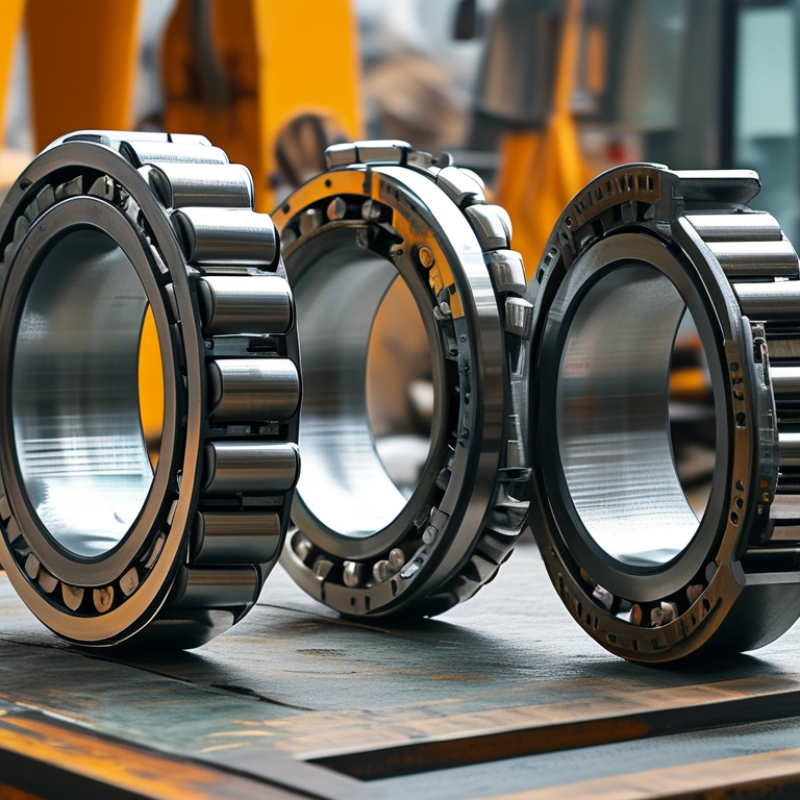
Three Row Roller Slewing Bearings are gaining attention in heavy machinery due to their unique design. These bearings provide a greater load capacity with improved stability. According to the Machinery Industry Data Report 2025, slewing bearings represent a pivotal component in cranes, excavators, and other heavy equipment, with a projected market growth rate of 8.5% over the next five years.
The three-row design allows for better distribution of forces. This structure increases reliability and extends the product life. The adjusted load distribution enhances the operational efficiency of heavy machinery, ensuring safer and smoother operations. A study by the Heavy Equipment Manufacturers Association indicated that effective bearing design can reduce maintenance costs by up to 30%.
Tip: Always consider the load requirements and operational conditions when selecting slewing bearings. A mismatch can lead to premature wear and increased downtime.
Another important aspect of Three Row Roller Bearing technology is its versatility. These bearings can be used in various applications, making them suitable for diverse machinery types. However, improper installation or insufficient lubrication can lead to performance issues. Regular inspections are crucial to maintaining optimal performance.
Tip: Establish a maintenance schedule to check the bearings regularly. This proactive approach can prevent costly shutdowns in operations.
In 2026, three-row roller slewing bearings are poised to revolutionize industry standards. These bearings are designed to handle a significant increase in load capacity compared to their predecessors. This enhancement is crucial for machinery that operates under heavy loads. With advanced engineering, they provide stability and reliability in challenging environments.
Industries are under constant pressure to improve efficiency. The improved load capacity of these bearings allows for the use of larger equipment without compromising safety. This is particularly important in sectors such as construction and renewable energy, where heavy machinery plays a vital role. However, not all applications will benefit equally. It’s essential for engineers to assess the specific needs of their projects to maximize the advantages.
While the improvements are promising, not every manufacturer is ready to adopt these innovations. The transition may involve substantial costs and training. Companies must weigh the short-term challenges against long-term gains. Thoughtful implementation strategies are needed for successful adoption. Without careful planning, potential benefits may be lost or misunderstood.
Three row roller slewing bearings are gaining attention for their enhanced precision and stability in various applications. These bearings feature three distinct rows of rollers, allowing for greater load distribution. According to industry reports, they can support high radial, axial, and tilting loads. This capability enhances the overall performance of machinery, especially in demanding environments like construction and heavy lifting.
Precision in manufacturing is vital. In 2025, it was reported that more than 40% of machinery failures stemmed from bearing inaccuracies. Three row bearings minimize such issues by distributing forces evenly. This improves the alignment and reduces wear, which is essential for longevity. Regular maintenance and monitoring are still vital. However, the design of these bearings offers a robust solution for reducing unexpected downtime.
Stability is another key aspect. With a broader contact surface, roller slewing bearings can withstand dynamic forces better. A recent study indicated that machines utilizing these bearings exhibited a 20% increase in operational efficiency. This improvement can lead to substantial cost savings. Yet, challenges remain, such as installation complexity, which requires skilled professionals for optimal results. Implementing these bearings involves careful planning, but the payoff can be significant.
When comparing three row roller slewing bearings to single row variants, it's essential to consider their structural differences. Three row roller bearings feature three independent rows of rollers. This design allows for improved load distribution. They can handle axial, radial, and moment loads simultaneously. Essentially, this enhances their overall stability and performance.
Single row bearings, on the other hand, have a simpler design. They often result in a lighter and more compact solution. However, they may struggle under heavy loads. This can lead to wear and reduced service life. For applications requiring high load capacity, three row designs are generally more reliable. Yet, their complexity might lead to higher maintenance demands. This trade-off needs careful evaluation.
Installation can also be more intricate with three row bearings. Their alignment is crucial for optimal function. Misalignment can cause premature failure. While they offer higher performance, the need for precision increases. Users must weigh their operational requirements against the installation challenges. In many scenarios, the enhanced capability of three row designs outweighs potential drawbacks.
| Specification | Three Row Roller Slewing Bearings | Single Row Slewing Bearings |
|---|---|---|
| Load Capacity (kN) | Up to 8000 | Up to 3000 |
| Rotational Accuracy | High Precision | Standard Precision |
| Weight (kg) | 1500 | 800 |
| Installation Space Required (mm) | 600 | 400 |
| Typical Applications | Cranes, Excavators | Solar Trackers, Small Machinery |
In 2026, three-row roller slewing bearings are poised to play a crucial role in promoting sustainability and longevity. These bearings enhance load capacity and stability, making them ideal for heavy-duty applications. By distributing loads evenly, they reduce wear and prolong the lifespan of machinery. The result? Less frequent replacements and reduced waste.
Longevity is a key feature of these bearings. They are designed to withstand harsh conditions, reducing the need for intensive maintenance. This means longer uptime for equipment and lower operational costs. However, some industries still struggle to optimize their use. There is a need for more research on effective maintenance practices.
Sustainability goes beyond longevity. The materials used in three-row roller slewing bearings can be recycled, supporting circular economy principles. Yet, there are challenges in sourcing these eco-friendly materials. More collaboration among manufacturers can help overcome these obstacles. As we advance, focusing on sustainable engineering solutions will be vital for future innovations in bearing technology.
: They feature three distinct rows of rollers for enhanced load distribution and stability.
They minimize inaccuracies, distribute forces evenly, and reduce wear, leading to fewer machinery failures.
They handle axial, radial, and moment loads better, enhancing overall stability and performance.
Yes, their design is more reliable under heavy loads compared to single row bearings.
Yes, precision alignment is crucial. Misalignment can lead to premature failure.
They reduce wear and prolong machinery lifespan, leading to less frequent replacements and waste.
There is a need for more research on maintenance practices for optimal use.
Despite their robust design, regular monitoring is vital to ensure long-term performance.
Yes, they can be recycled, but sourcing eco-friendly materials remains a challenge.
Users must weigh operational requirements against installation complexity and maintenance demands.
The article "Discover the Benefits of Three Row Roller Slewing Bearings in 2026" explores the advantages of utilizing Three Row Roller Slewing Bearings in heavy machinery applications. These innovative bearings improve load capacity significantly, catering to the evolving demands of the industry by providing enhanced precision and stability. The year 2026 represents an important perspective as advancements continue to shape the effectiveness of these bearings.
Additionally, the article offers a comparative analysis of Three Row Roller Slewing Bearings versus traditional single-row alternatives, highlighting the former's superior performance in various applications. Sustainability and longevity are pivotal themes, underscoring how Three Row Roller Slewing Bearings not only meet current operational needs but also contribute to longer service life and reduced environmental impact in the machinery sector.

Manchen Transmission