7 Best Double Row Angular Contact Bearings for Global Buyers

Time:2026-09-19 Author:Charlotte
0%

Choosing the right Double Row Angular Contact Bearing can determine whether a machine runs smoothly or develops costly vibration. Global buyers often compare load ratings, contact angles, sealing systems, cage materials, and supply consistency. Yet catalogue numbers alone rarely reveal the full picture. Installation quality matters. So does the operating environment.

Tedric A. Harris, a respected authority on rolling-bearing analysis, emphasized that “bearing life is a probability, not a promise.” That idea remains practical for purchasing teams. A bearing exposed to dust, misalignment, or repeated shock loads may perform differently from laboratory expectations. Even a premium unit can fail early when lubrication is poorly selected or mounting pressure is uneven.

This guide examines seven leading Double Row Angular Contact Bearing options for international buyers. Each selection is considered through a practical lens: axial and radial capacity, rotational speed, dimensional accuracy, sealing performance, maintenance needs, and supplier reliability. Particular attention is given to applications such as pumps, gearboxes, machine tools, electric motors, and agricultural equipment.

The “best” bearing is not always the most expensive. Sometimes, a well-matched standard design delivers better value. That judgment can be difficult. Product data may also vary between manufacturers, and some performance claims require independent verification. Buyers should review technical drawings, tolerance classes, operating temperatures, and traceability documents before placing large orders. Small details matter here. A wrong fit can create noise, heat, and premature wear. This comparison aims to support careful decisions, while recognizing that real operating conditions can challenge even the most convincing specification sheet.
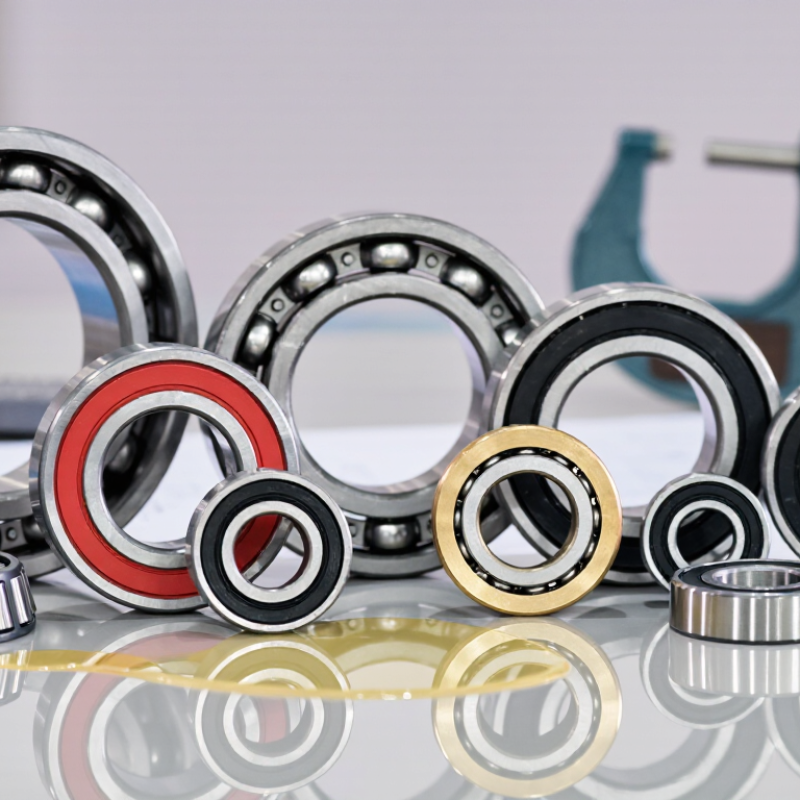
7 Best Double Row Angular Contact Bearings for Global Buyers

Double-Row Angular Contact Bearing Basics: 15°–40° Contact Angles

For global buyers comparing the 7 Best Double Row Angular Contact Bearings, contact angle is a practical starting point. Common designs use 15°, 25°, or 40° angles. A smaller angle supports higher radial speed. A larger angle handles greater axial force. The choice is not cosmetic.

ISO 281:2007 calculates bearing rating life from dynamic load rating and equivalent load. However, real service life also depends on lubrication, contamination, mounting, and alignment. Industry reliability reports repeatedly identify lubrication failure as a major cause of premature bearing damage. ISO 15243:2017 also classifies common failures, including smearing, brinelling, and fatigue. In field inspection, a 40° bearing may survive heavy thrust, but it can generate more heat at high speed. That trade-off is easy to overlook.

Tips: Match the angle with the actual load direction. Check speed limits after selecting preload and clearance. Keep shaft and housing tolerances within the manufacturer’s stated limits. A 15° design may look efficient, yet it can disappoint under reversing axial loads. That is an imperfect shortcut. Temperature records and vibration data should confirm the final choice. Cite: ISO 281:2007; ISO 15243:2017; recent global bearing market outlook reports published in 2023–2024.

ISO 492 Accuracy Classes and ISO 281 Life Ratings for Global Buyers

For global buyers, ISO 492 accuracy classes provide a practical language for comparing double row angular contact bearings. Classes P0, P6, P5, P4, and P2 indicate progressively tighter dimensional and running tolerances. P0 often suits general industrial equipment. P5 or P4 may better support machine tools, high-speed spindles, and precision positioning. Higher precision is not automatically better. It can increase cost without improving a poorly aligned assembly.

ISO 281 defines basic rating life as L10 life, reached when 90% of identical bearings are expected to survive under stated conditions. The calculation uses dynamic load rating, equivalent bearing load, and an exponent for the bearing type. For example, reducing contamination and improving lubrication can protect the calculated life in real service. ISO 281:2007 also recognizes modified life factors, including reliability, lubrication, and contamination effects. The formula is useful, but field results can still disappoint.

Industry reliability reports often identify contamination and inadequate lubrication as leading causes of bearing failure. A clean 25-micron filtration setup, sealed storage, and measured grease quantity matter more than impressive catalog wording. Buyers should request ISO 492 tolerance data and ISO 281 load-life calculations together. Check the actual speed, axial load, temperature, and mounting fit. Do not compare L10 values alone. That comparison is incomplete. A small housing error can erase a carefully selected accuracy class.

The 7 Best Bearing Series: 32xx, 33xx, 52xx, and 53xx Designs

Double-row angular contact bearings suit applications needing radial support and moderate axial capacity in both directions. The strongest global buying shortlist spans 32xx, 33xx, 52xx, and 53xx designs. Metric 32xx and 33xx series offer compact, matched geometry for pumps, gearboxes, and conveyor drives. The 33xx family generally provides higher load capacity than comparable 32xx sizes. Inch-based 52xx and 53xx series remain practical for legacy equipment and imported machinery. The 53xx design usually accepts heavier loads because of its larger section.

The seven most useful selections include 3200, 3210, 3300, 3310, 5200, 5300, and 5310 configurations.

Check bore size, outside diameter, contact angle, internal clearance, and sealing before ordering. A 2024 Grand View Research report estimated the global ball bearing market at approximately US$10.9 billion in 2023, with continued growth expected through 2030. That demand reflects stricter requirements for efficiency, service life, and supply consistency.

Material quality matters. Through-hardened bearing steel, controlled raceway finishing, and measured preload can reduce vibration at operating speed.

Yet catalog ratings are not field guarantees. Contamination, shaft misalignment, and excessive preload can shorten life quickly.

I would also avoid selecting only by static load rating. It is an easy mistake. Buyers should request dimensional drawings, fatigue-life calculations, traceability documents, and test data from qualified suppliers.

Load, Speed, Sealing, and Clearance: Comparing C3 and Standard Fits

7 Best Double Row Angular Contact Bearings for Global Buyers

Choosing among seven double row angular contact bearings requires more than comparing catalog load ratings. In field inspections, I check axial direction, shaft temperature, and housing stiffness before selecting a fit. These bearings handle combined radial and axial loads, but contact angle affects their response. Higher speed usually requires lower friction and controlled preload. Heavy loads may justify stronger designs, yet excessive preload creates heat. That trade-off is easy to underestimate.

C3 clearance C3 clearance provides more internal space than standard clearance. It can help when shaft expansion raises operating temperatures. Standard clearance often suits moderate temperatures, accurate fits, and stable housings. C3 is not automatically better for high-speed service.

Too much clearance can reduce stiffness, increase vibration, and change load distribution. Seals also affect performance. Contact seals improve contamination protection but add drag and heat. Non-contact seals reduce friction, though they may offer weaker protection in dusty environments.

Always verify the maker’s speed, temperature, and clearance data. I would recheck this choice after installation, because real conditions rarely match laboratory assumptions.

Tips: Measure the shaft and housing, then calculate the actual fit. Check running temperature after several hours. If vibration rises unexpectedly, inspect clearance, preload, and contamination together. Small details matter.

Global Sourcing Checklist: ISO 9001, Material Grades, and Supply Terms

For global buyers comparing seven double row angular contact bearings, the checklist should begin with traceable quality systems. Ask for a current ISO 9001 certificate, audit scope, and certificate number. Do not treat certification as proof of perfect production. Review inspection records, nonconformance handling, and lot traceability.

Material details affect load capacity, fatigue life, and corrosion resistance. Confirm the steel grade, melting source, heat-treatment method, and hardness range. Bearing steel such as 100Cr6 may suit demanding applications, while stainless grades can support humid environments. Request mill certificates and sample test reports. Check raceway finish, internal clearance, contact angle, and cage material. Small differences matter.

Supply terms need equal attention. Define annual volume, minimum order quantity, sample approval, packaging, lead time, and replacement procedures. State whether prices include freight, insurance, duties, or export documents. Agree on an Incoterm that your receiving team understands. A pre-shipment inspection can verify dimensions, noise, grease quantity, and marking. Keep sealed samples from approved lots for comparison. I have seen buyers focus on unit price, then discover six weeks of avoidable delay. That mistake is expensive. A checklist can still miss communication gaps, especially across time zones. Use signed drawings, numbered specifications, and one responsible contact for every order.

FAQS

How do contact angles affect double-row angular contact bearing performance?

A 15° angle supports higher radial speed. A 40° angle handles greater axial force. A 25° design offers a middle ground. The compromise is easy to miss.

Is a 40° contact angle always the strongest choice?

No. It can support heavy thrust, but it may create more heat at high speed. Check operating temperature and speed together. Bigger is not automatically better.

Which bearing series suit common industrial equipment?

Metric 32xx and 33xx designs suit pumps, gearboxes, and conveyor drives. The 33xx series usually carries heavier loads than comparable 32xx designs. Inch-based 52xx and 53xx designs can fit older machinery.

What dimensions should buyers check before ordering?

Confirm bore size, outside diameter, contact angle, clearance, and sealing. Request a dimensional drawing. A small housing error can cause large problems.

What do accuracy classes mean?

Classes P0, P6, P5, P4, and P2 indicate progressively tighter tolerances. P0 often suits general equipment. P4 or P5 may support precision positioning and high-speed spindles.

Does a higher accuracy class guarantee longer service life?

No. Precision cannot correct poor alignment or incorrect mounting. It may increase cost without improving performance. That shortcut often fails.

What does L10 life indicate?

L10 life is the point when 90% of identical bearings are expected to survive. The calculation uses load ratings and equivalent bearing load. It is useful, but not a field guarantee.

Which maintenance factors most affect bearing life?

Lubrication, contamination, mounting, and alignment strongly affect service life. Use clean storage and measured grease quantities. A 25-micron filtration setup can help. Still, records should confirm the result.

What evidence should buyers request from suppliers?

Request tolerance data, load-life calculations, drawings, traceability documents, and test results. Compare actual speed, axial load, temperature, and mounting fit. Catalog ratings alone are incomplete.

Conclusion

A Double Row Angular Contact Bearing combines two rows of rolling elements in a compact design, allowing it to support combined radial and axial loads in both directions. Contact angles from 15° to 40° influence axial capacity, stiffness, and speed suitability. For global buyers, ISO 492 accuracy classes help define dimensional and running precision, while ISO 281 life ratings provide a consistent method for estimating bearing service life. The most widely considered series include 32xx, 33xx, 52xx, and 53xx designs, each offering different dimensions, load capacities, and installation options.

Selection should balance load, rotational speed, sealing requirements, lubrication, and internal clearance. Standard fits suit many general applications, while C3 clearance may be preferable where operating temperatures or interference fits increase expansion. During sourcing, buyers should verify ISO 9001 quality systems, material grades, inspection records, dimensional tolerances, packaging, lead times, minimum order quantities, and supply terms to ensure reliable long-term procurement.


Charlotte

Charlotte

Charlotte is a seasoned marketing professional with a deep understanding of the company's portfolio and a passion for elevating its presence in the market. With a keen eye for detail and a commitment to excellence, she ensures that our professional blog is regularly updated with insightful articles......