How to Choose the Best Double Row Bearing from China?

Time:2026-10-14 Author:Sophia
0%

Choosing the best Double Row Bearing from China requires more than comparing prices or reading polished product catalogs. The correct choice depends on load direction, operating speed, shaft size, temperature, sealing needs, and expected service life. A bearing that looks identical online may perform very differently inside a dusty conveyor or a high-speed gearbox.

Tedric A. Harris, a respected authority on rolling bearing analysis, stated, “Bearing selection is an engineering decision, not a catalog decision.” This principle remains highly practical. Buyers should examine the bearing’s internal clearance, raceway finish, cage design, steel grade, heat treatment, and grease compatibility. Ask for dimensional reports, material certificates, life calculations, and inspection records. ISO 9001 certification helps, but it does not replace technical verification.

A reliable Chinese manufacturer should explain its process clearly. Look for traceable batch numbers, controlled assembly areas, vibration testing, rotational noise testing, and documented quality procedures. Request samples before placing a large order. Measure bore diameter, outside diameter, radial runout, and rotation smoothness. Small details matter. Even packaging deserves attention because moisture can damage precision surfaces during long transportation.

Price still matters, but it should not lead the decision. An unusually cheap Double Row Bearing may conceal inconsistent steel, weak seals, or unstable clearance. We can also make mistakes by trusting certificates without checking production evidence. Therefore, this guide examines supplier capability, bearing construction, testing methods, customization, delivery reliability, and after-sales support. The goal is not to find the cheapest bearing. It is to find a dependable component for the actual machine.
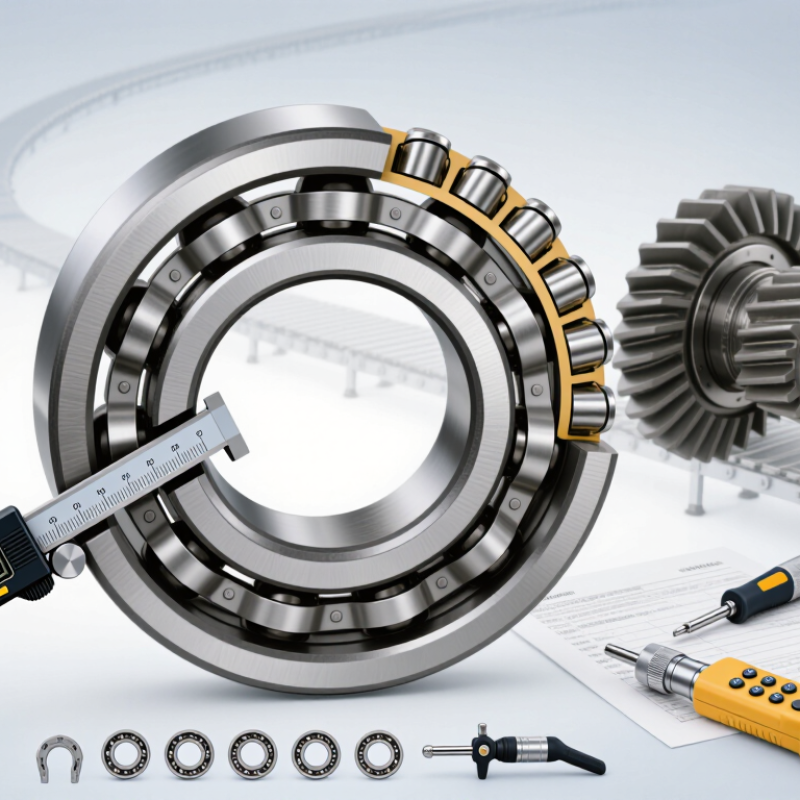
How to Choose the Best Double Row Bearing from China?

What Is a Double Row Bearing and How Does It Work?

A double row bearing contains two parallel rows of rolling elements inside shared inner and outer raceways. The balls or rollers reduce friction while carrying rotating loads. Each row spreads pressure across a wider contact area. This structure usually supports higher radial loads than a comparable single row bearing.

Its working behavior depends on the design. A double row deep groove bearing can handle radial loads and limited axial loads from both directions. A spherical roller version can tolerate heavier loads and small shaft misalignment. The cage keeps each rolling element separated, while grease or oil forms a thin protective film. Clearance matters. Too little clearance can create heat, while excessive clearance may cause vibration and noise.

When choosing a double row bearing from China, check the load rating, speed, shaft size, operating temperature, sealing method, and required clearance. Ask for material details, dimensional inspection records, and load or noise test results. A sample run is valuable. It can reveal rough rotation, uneven grease distribution, or poor sealing before a larger order. I once relied too heavily on a catalog code. That was a mistake. The application conditions were more important than the code itself. Confirm tolerance standards, packaging quality, traceability, and inspection procedures with the manufacturer. Clear technical drawings prevent expensive misunderstandings.

Which Double Row Bearing Type Fits Your Application?

Choosing the best double row bearing from China starts with the application, not the catalogue. Each bearing type handles loads differently.

Double row angular contact ball bearings suit applications requiring combined radial and axial loads. They offer good stiffness and controlled rotation in pumps, gearboxes, and precision machinery.

Double row spherical roller bearings are better for heavy loads, shaft deflection, or housing misalignment. Their rollers tolerate installation errors more effectively.

For high radial loads and strong rigidity, double row cylindrical roller bearings can be a practical option. However, they usually require more careful alignment and axial guidance.

I have seen buyers select by bore size alone, then face noise, heat, or short service life. That approach is too simple. Check speed, load direction, shock levels, operating temperature, lubrication, and available space. A perfect choice on paper may still fail during dirty or poorly aligned operation. Ask the supplier for load ratings, clearance values, material details, heat-treatment records, and inspection reports. Reliable manufacturers should explain these points clearly, not hide behind general claims.

Tips: Measure the shaft and housing accurately. Confirm whether misalignment is expected. Compare calculated life with real operating conditions. Request sample bearings before large orders. Listen for roughness during slow manual rotation. Small warning signs matter. Also review sealing needs, grease compatibility, and replacement availability. In some cases, a slightly larger bearing improves durability, but it may create unnecessary friction or installation problems. That trade-off deserves another check.

How to Evaluate Bearing Materials, Load Capacity, and Performance

How to Choose the Best Double Row Bearing from China?

Material selection controls fatigue life, heat resistance, and contamination tolerance. Standard high-carbon chromium steel remains common for general industrial applications. Its typical hardness reaches approximately 60–66 HRC after proper heat treatment. Stainless steel suits moisture exposure, but its load capacity may be lower. Ceramic rolling elements reduce density and heat generation, although their price and brittleness require careful evaluation.

ISO 281:2007 defines basic rating life, L10, at 90% reliability. Use the manufacturer’s dynamic load rating, rotating speed, and actual operating load. ISO 76:2006 provides methods for calculating static load ratings. A double row bearing needs more than a large catalog number. Check radial load, axial load, contact angle, internal clearance, and shaft misalignment. Small errors matter.

Inspect heat-treatment records, steel cleanliness, dimensional reports, and batch traceability. ASTM E45 methods can help assess nonmetallic inclusions in bearing steel. Ask for vibration, noise, grease, and temperature test results from sampled production lots.

I would not trust a perfect spreadsheet alone. The bearing may pass inspection yet fail under poor lubrication or sudden shock loads. Field experience often reveals what laboratory data misses. That is uncomfortable, but useful. Compare calculated L10 life with real duty cycles, start-stop frequency, contamination, and maintenance intervals before approving a Chinese supplier.

What Quality Standards Should Chinese Bearing Manufacturers Meet?

When choosing a double row bearing from China, quality standards deserve more attention than price. A reliable manufacturer should operate under ISO 9001 quality management procedures. Production records must cover steel batches, machining, heat treatment, assembly, and final inspection. Traceability matters when a bearing later shows unusual wear.

Dimensional accuracy should follow recognized bearing standards, such as ISO 492. Ask for tolerance data, radial clearance values, and inspection records for each production batch. The manufacturer should also control hardness, surface roughness, and raceway geometry. These details affect load capacity, noise, and service life. Small errors can become expensive failures.

Material verification is essential. Request certificates for bearing steel and confirm chemical composition through independent testing when necessary. Heat treatment needs documented temperatures, holding times, and hardness results. A serious factory should test vibration, rotation accuracy, sealing performance, and fatigue resistance. Samples should run under realistic loads, not only ideal laboratory conditions.

Look beyond impressive certificates. During a factory audit, inspect clean assembly areas, calibrated instruments, and storage conditions. Poor packaging can introduce moisture before installation. That is an overlooked risk.

Some suppliers may provide complete reports but weak process discipline. This is where buyers must remain skeptical. No factory is perfect. Even experienced manufacturers can miss an abnormal batch. A clear corrective-action system, honest communication, and repeatable inspection are stronger signs of reliability than attractive promises.

How to Compare Suppliers, Prices, and After-Sales Support

Choosing the best double row bearing from China requires more than comparing unit prices. Confirm the bearing type, load rating, clearance, sealing, grease, and dimensional tolerance. Request inspection records, material certificates, and test data linked to each batch. ISO 281 provides the standard method for calculating dynamic load ratings and bearing life.

Compare suppliers using identical specifications and delivery terms. A useful quotation should separate bearing cost, tooling, packaging, freight, insurance, and import charges. Fortune Business Insights estimated the global bearing market at USD 123.69 billion in 2023, showing the scale of competition and price variation. However, low prices may reflect thinner inspection procedures, shorter warranties, or unclear steel sources. Cheap is not always cheap.

After-sales support needs measurable terms. Ask about response time, replacement procedures, technical drawings, failure analysis, and spare-part availability. Request a written warranty, not only a sales promise. Suppliers with ISO 9001 systems may offer stronger process control, but certification alone proves little without recent audit records. Review sample reports for noise, vibration, hardness, and rotational accuracy. The U.S. Department of Energy’s industrial motor research links poor bearing maintenance with avoidable energy losses, so technical guidance affects operating cost. I would still test a small batch before a large order. One overlooked tolerance can damage an otherwise careful procurement decision.

How to Choose the Best Double Row Bearing from China?

Compare suppliers using a transparent 100-point purchasing score. The weighting emphasizes total cost, verified bearing performance, traceability, delivery reliability, and after-sales support.

How to use this chart: Score each supplier from 0 to 100 for every criterion, multiply the score by the corresponding weight, and add the results. A lower quoted price should not outweigh weak load-rating evidence, quality documentation, or limited after-sales support.

FAQS

What is a double row bearing?

It contains two parallel rows of balls or rollers. These elements share inner and outer raceways. The design spreads pressure across a wider contact area. It usually carries higher radial loads than a single row bearing. The cage keeps rolling elements separated.

How does a double row bearing reduce friction?

Balls or rollers move between hardened raceways. A thin grease or oil film protects the surfaces. This reduces direct metal contact. Too little clearance creates heat. Too much clearance causes vibration and noise. Small details matter.

Which bearing type suits heavy loads and misalignment?

A spherical roller design suits heavy radial loads. It also tolerates small shaft or housing misalignment. A cylindrical roller design offers strong radial capacity and rigidity. However, it needs careful alignment and axial guidance. Installation errors still matter.

When should I choose a double row angular contact bearing?

Choose it when radial and axial loads act together. It can support axial forces from controlled directions. It also provides useful stiffness during rotation. Pumps, gearboxes, and precision equipment may need this design. Check the actual load direction first.

What specifications should I check before purchasing?

Check load rating, speed, shaft size, and operating temperature. Also confirm clearance, sealing, lubrication, and available installation space. Request material details and dimensional tolerances. Ask for inspection records and test results. Bore size alone is not enough.

How can I test a sample bearing?

Rotate it slowly by hand. Listen for scraping, clicking, or uneven movement. Check grease distribution and seal condition. Measure critical dimensions before installation. A short sample run can reveal hidden problems. I once trusted a catalogue code too much. That was a mistake.

How should I compare supplier quotations?

Compare identical specifications and delivery conditions. Separate bearing cost, tooling, packaging, freight, insurance, and import charges. Check whether inspection records match each production batch. A low price may hide weaker process control. Cheap is not always cheap. Review the complete cost.

What after-sales support should a supplier provide?

Request written warranty terms and response times. Confirm replacement procedures and failure-analysis support. Ask for technical drawings and spare-part availability. Review reports covering noise, vibration, hardness, and rotational accuracy. Certification can help, but records matter more. Test a small batch first.

Conclusion

Choosing the best Double Row Bearing from China requires more than comparing prices. A double row bearing uses two rows of rolling elements to support radial loads, axial loads, or a combination of both, while offering greater rigidity and load capacity than many single-row designs. The right type depends on your equipment, operating speed, available space, alignment conditions, temperature, and expected load. Buyers should also evaluate material quality, heat treatment, sealing performance, lubrication requirements, service life, and resistance to wear or corrosion.

Reliable Chinese manufacturers should provide consistent dimensions, accurate tolerances, traceable materials, documented inspection procedures, and compliance with recognized international quality standards. When comparing suppliers, review their production capabilities, testing equipment, delivery reliability, customization options, pricing structure, and after-sales support. A lower initial price may not represent the best value if quality control and technical assistance are limited. Clear specifications, sample testing, warranty terms, and responsive communication can help you select a dependable Double Row Bearing for long-term performance.

Sophia

Sophia

Sophia is a dedicated marketing professional with an exceptional depth of knowledge about her company's products and services. With a keen understanding of market trends and customer needs, she crafts insightful blog posts that not only inform but also engage readers, enriching the company’s online......