High-Precision Crossed Roller Bearings are essential components in modern machinery and equipment. Their unique design allows for high load capacities in limited spaces. According to a report by Transparency Market Research, the demand for precision bearings is expected to grow at a CAGR of 5.3% from 2023 to 2031. This increase highlights the significant role of High-Precision Crossed Roller Bearings in various applications, particularly in robotics and aerospace.
These bearings are designed to manage both radial and axial loads. They do this with minimal friction and wear. As industries strive for greater efficiency, High-Precision Crossed Roller Bearings provide a compelling solution. Their benefits extend to improved positional accuracy and increased lifespan of machinery.
However, challenges remain in adoption. Not all manufacturers are equipped to produce these bearings to the required specifications. The complexities in design and the need for precise machining can lead to variability in performance. This calls for ongoing research and development in the industry. It's crucial to address these issues to fully leverage the benefits of High-Precision Crossed Roller Bearings.
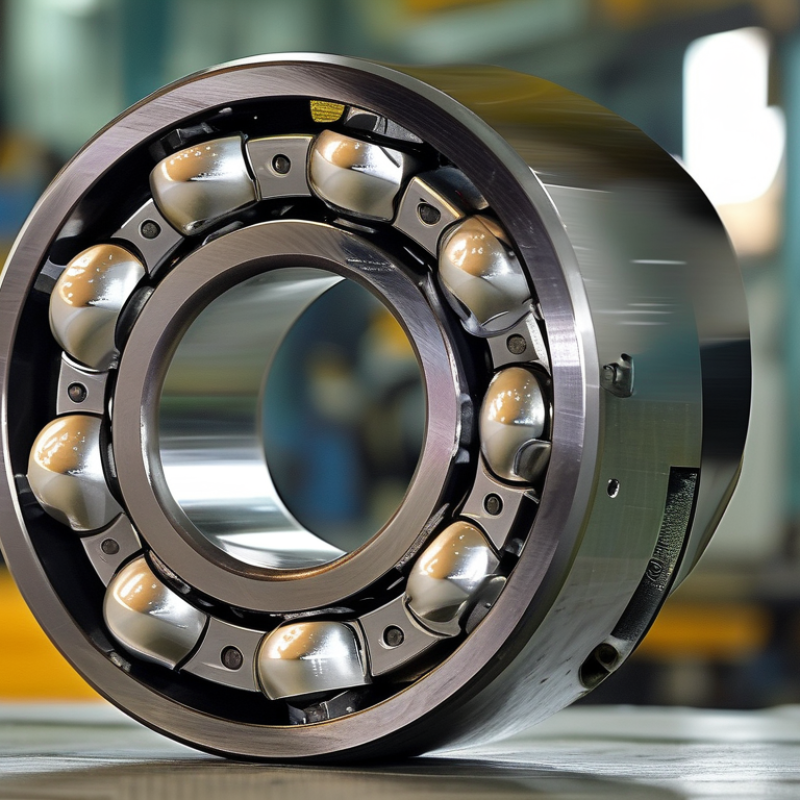
High-precision crossed roller bearings represent a critical advancement in mechanical technology. They consist of cylindrical rollers that are arranged in a crisscross pattern. This unique configuration allows for high load capacity and stability while minimizing friction. The structure typically incorporates an outer shell and an inner ring, with roller guides to ensure smooth operation. The design constraints offer an effective solution for applications requiring precise motion control.
In terms of performance, a report by the International Institute of Robotics reveals that crossed roller bearings can achieve an accuracy of up to 5 micrometers. This level of precision is vital for sectors such as aerospace and medical devices, where even the slightest deviation can lead to significant operational failures. The versatility of these bearings also makes them ideal for robotics, CNC machinery, and optical applications, where both dynamic and static load capacities are essential.
Despite their advantages, high-precision crossed roller bearings do present challenges. Their complexity can result in higher manufacturing costs. Furthermore, improper installation or maintenance may lead to performance issues, emphasizing the importance of expert handling. While they significantly enhance efficiency, transitioning to these bearings requires careful consideration and understanding of both their benefits and limitations.
High-precision crossed roller bearings are increasingly popular in various industrial applications. These bearings offer several key features that contribute to their effectiveness. One standout characteristic is their ability to accommodate both radial and axial loads in a compact design. This versatility allows for more efficient use of space in machinery. Reports indicate that companies using high-precision bearings can achieve a 30% increase in operational efficiency compared to traditional bearings.
Another significant feature is their low friction coefficient, which minimizes energy loss. This results in less heat generation during operation. According to industry studies, reduced friction can lead to a lifespan increase of up to 50% in certain applications. Additionally, the roller arrangement within these bearings reduces wear, promoting longer service intervals.
**Tip:** Regular lubrication is crucial for maintaining performance. Even high-precision bearings require proper maintenance to ensure longevity and effectiveness.
While the benefits are clear, challenges do exist. High-precision crossed roller bearings can be more sensitive to installation errors. Misalignment or improper mounting can lead to reduced performance. Additionally, the initial investment may be higher. However, the long-term savings often outweigh these upfront costs.
**Tip:** Conduct thorough training for staff on proper installation practices to mitigate these risks effectively.
| Feature | Description | Benefits |
|---|---|---|
| High Load Capacity | Designed to support heavy loads without deformation | Increased reliability in heavy-duty applications |
| Compact Design | Space-saving with a cylindrical shape and minimal installation space | Ideal for applications with spatial constraints |
| Precision Alignment | Allows for accurate positioning and movement | Enhanced performance and accuracy in machinery |
| Low Friction | Smooth movement due to optimized roller contact | Reduced wear and prolonged service life |
| Multi-axial Motion | Can support movement in multiple directions | Versatile use in various applications |
High-precision crossed roller bearings offer numerous advantages in various applications. These bearings consist of cylindrical rollers arranged in a crisscross pattern, which allows them to handle loads from multiple directions simultaneously. This unique design enhances rigidity and stability, making them ideal for high-precision machinery. Users can achieve remarkable accuracy and efficiency in their systems by integrating these bearings.
One key benefit of high-precision crossed roller bearings is their ability to minimize friction. The rolling motion of the rollers reduces wear and prolongs the bearing's lifespan. This translates to less maintenance and lower operational costs over time. Additionally, these bearings excel in environments with limited space. Their compact size allows for streamlined design without compromising performance.
Tip: Regularly inspect your bearings to ensure optimal performance. Pay attention to any unusual noises or changes in movement.
Furthermore, high-precision crossed roller bearings are designed to withstand extreme conditions. They can function effectively in various temperatures and pressures. However, users should carefully consider their specific applications. Overloading these bearings may lead to unexpected failures, prompting a need for reevaluation.
Tip: Consult with industry experts to choose the right bearing for your task. This can prevent costly mistakes and improve overall system reliability.
High-precision crossed roller bearings are critical components in several industries. Their design features two sets of rollers positioned at right angles. This configuration allows for high load capacity and excellent rigidity. In robotics, these bearings enable precise motion control, essential for automated systems. A report by the International Federation of Robotics highlights the growing demand for robotics technologies, expected to reach a market size of $73 billion by 2025.
In the medical field, high-precision bearings are key to advanced imaging equipment, such as MRI machines. These machines require stable and precise movements for accurate results. The global medical imaging market is projected to grow at a CAGR of 5.6%, emphasizing the rising need for reliable components. Without high-precision bearings, the quality of imaging could severely diminish, affecting diagnoses.
Moreover, in the aerospace sector, reliability is non-negotiable. Here, crossed roller bearings support landing gear systems and control surfaces. A study by the Aerospace Industries Association reveals that robust components can significantly enhance safety and performance in aviation. However, manufacturers face challenges in balancing precision with cost. Innovations are needed to meet rising quality standards while managing production expenses. As industries grow, so must the technologies that support them.
High-precision crossed roller bearings are vital in various applications. Their performance largely depends on proper maintenance and care. Regular inspection is crucial to ensure longevity. Even slight misalignments can lead to significant issues such as vibration or overheating. According to industry reports, maintenance neglect can decrease bearing lifespan by up to 50%.
Lubrication plays a special role. Over-lubrication can attract dirt and dust, while under-lubrication can accelerate wear. Understanding the correct lubricant type is essential. A clean environment is also necessary. Dust and contaminants can compromise performance. Many experts suggest that cleaned bearings should be re-lubricated every three to six months, depending on usage conditions.
Bearings can also show signs of wear over time. Monitoring for unusual noises or increased operational temperatures is important. A proactive approach helps catch issues early. However, not all facilities have the resources for regular checks. This can lead to overlooked problems, ultimately hampering operational efficiency. Regular staff training on maintenance protocols can mitigate these risks, ensuring that all team members understand the importance of care in preserving the integrity of high-precision crossed roller bearings.
: They are bearings with cylindrical rollers arranged in a crisscross pattern for stability and high load capacity.
They are ideal for aerospace, medical devices, robotics, and CNC machinery where precision is crucial.
They can achieve an accuracy of up to 5 micrometers in operation.
Regular lubrication and inspections are critical for maximizing lifespan and performance.
They can be sensitive to installation errors, leading to performance issues if not handled correctly.
Yes, the low friction and durability can reduce maintenance and lower operational costs over time.
Their design allows them to handle radial and axial loads efficiently in confined areas.
Proper training reduces the risk of misalignment and performance issues that can stem from incorrect handling.
Overloading can lead to unexpected failures, requiring careful evaluation of their use in specific applications.
Yes, they are designed to function effectively across various temperatures and pressures, but needs careful consideration.
High-Precision Crossed Roller Bearings are advanced mechanical components characterized by their unique construction, which consists of multiple rollers arranged in a crossed pattern. This design provides increased load capacity and enhanced stability, making them ideal for applications requiring high precision and reliability. Key features of these bearings include minimal friction, high rigidity, and compact design, which contribute to their superior performance in various industrial settings.
The advantages of using High-Precision Crossed Roller Bearings are numerous, including improved rotational accuracy and reduced wear over time. They are widely used in sectors such as robotics, medical equipment, and aerospace, where precision is crucial. To maintain their optimal functionality, regular maintenance and care are essential, ensuring longevity and consistent performance in demanding applications. Overall, High-Precision Crossed Roller Bearings are indispensable for achieving high standards in precision engineering.

Manchen Transmission