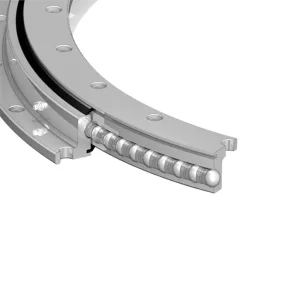
Analyzing the technological transition, macroeconomic viability, and systemic role of tracking mechanics in utility-scale thermal energy solar facilities.
Concentrated Solar Power (CSP) has solidified its role as an indispensable pillar of the global decarbonization strategy. Unlike traditional Photovoltaic (PV) systems, which suffer from intermittent generation profiles, CSP technologies integrate Thermal Energy Storage (TES) typically utilizing molten salt. This enables high-efficiency dispatchability, converting volatile solar radiation into reliable base-load power. As CSP systems scale globally, from the vast expanses of the Middle East and North Africa (MENA) to the high-altitude plateaus of Northwest China, the demand for high-reliability, long-lifecycle, and ultra-precise motion control systems has surged.
The deployment of CSP projects worldwide is undergoing a transition from demonstration initiatives to highly integrated utility-scale installations. The commercial viability of modern CSP plants hinges on their capacity factor, which frequently exceeds 70% when paired with molten salt tanks. Regions such as Spain, the Southwestern United States, South Africa, and Chile have established significant benchmarks. Today, China is leading the next phase of deployment with its Multi-Gigawatt Renewable Energy Bases. These massive desert installations incorporate tower-type CSP stations acting as frequency-regulating backbones for surrounding solar PV and wind farms.
In these capital-intensive projects, cost amortization relies on an operational lifespan exceeding 25 to 30 years. Consequently, sub-component sourcing must adhere to strict quality standards. Components like slewing bearings, tracking drives, and gearboxes must withstand constant mechanical loads, high wind forces, and extreme temperature fluctuations while maintaining micrometric positioning accuracy.
While parabolic trough technology has historically dominated the market, the industry is shifting toward solar tower configurations. Towers achieve higher concentration ratios and operating temperatures (above 560°C), resulting in improved thermodynamic efficiency in steam cycles.
Closed-loop tracking systems powered by computer vision and real-time solar positioning algorithms are replacing open-loop timer systems. This necessitates mechanical drives with near-zero backlash to execute micro-adjustments smoothly.
Combining low-cost PV for daytime electricity generation with CSP for evening power generation maximizes grid efficiency. Modern plants require robust mechanical tracking systems to manage hybrid configurations effectively.
Because CSP plants are located in arid, high-wind regions, operators prioritize components with advanced sealing technologies and maintenance-free or low-maintenance lubricating properties.
E-E-A-T Certified Transmission Partner
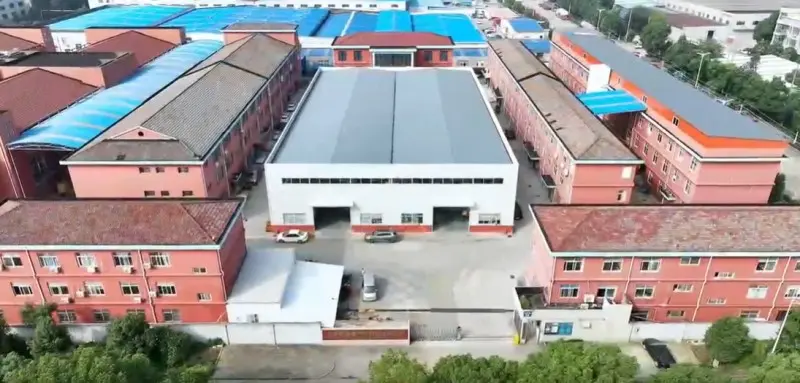
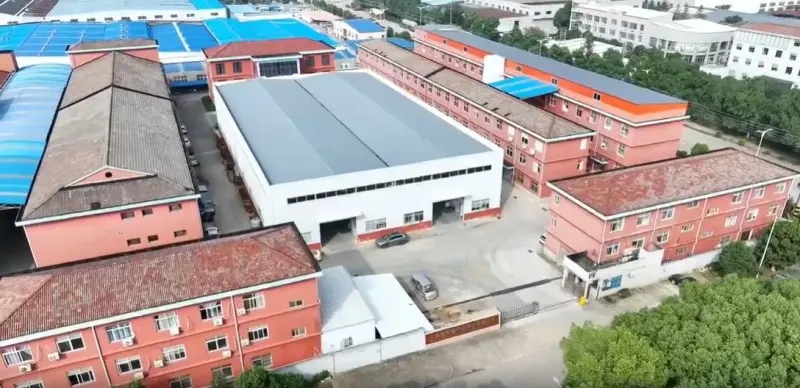
Established in 2022, Jiangsu Manchen Transmission Technology Co., Ltd. is a professional manufacturing enterprise integrating design, research and development, manufacturing, and sales. Located in Huangtu Town, Jiangyin City, Jiangsu Province, our facility benefits from excellent transportation networks and advanced infrastructure.
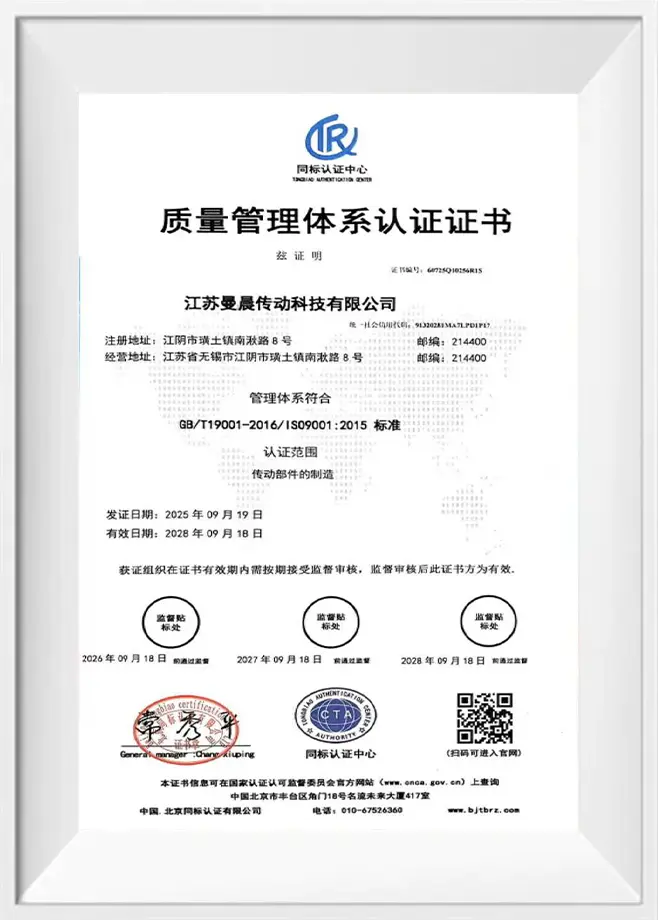
Relying on exquisite forging, heat treatment, and precision processing techniques, we provide high-load-bearing, high-strength, and long-life transmission solutions. These solutions support construction machinery, medical equipment, intelligent warehousing, the photovoltaic and CSP industries, port machinery, industrial robots, and environmental protection equipment. Equipped with advanced testing equipment and a complete quality control system, our products offer full traceability from raw material selection to final delivery, meeting both domestic and international standards.
We always adhere to the business philosophy of "quality first, mutual cooperation", delivering high-quality services and reliable products to new and old customers worldwide.

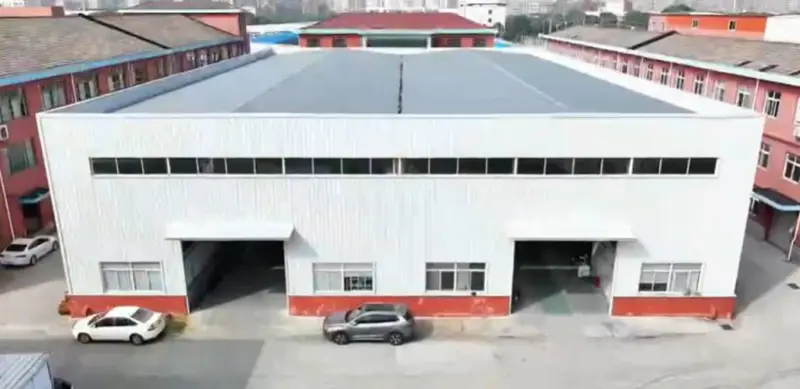
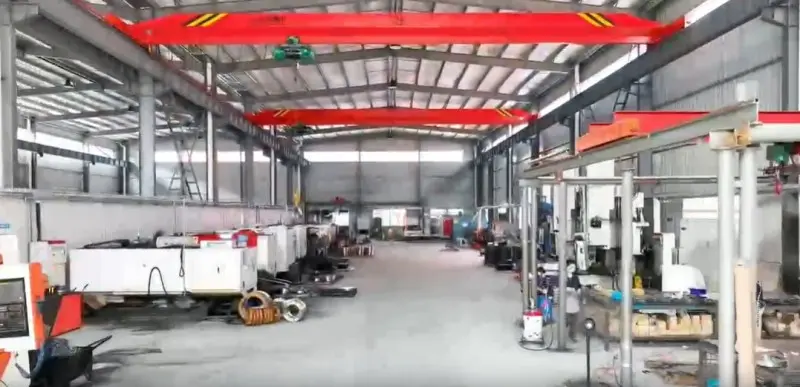
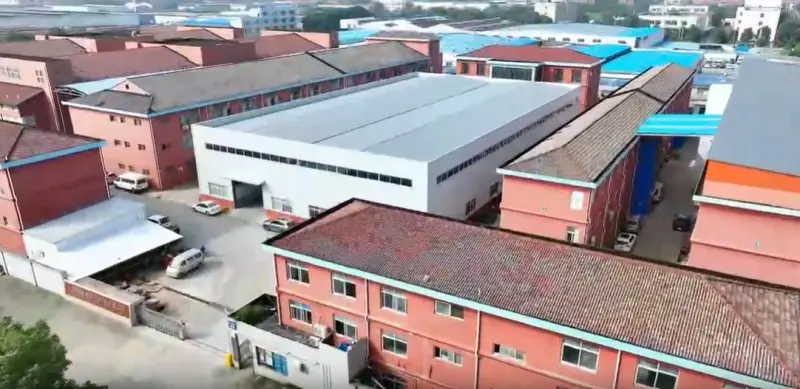
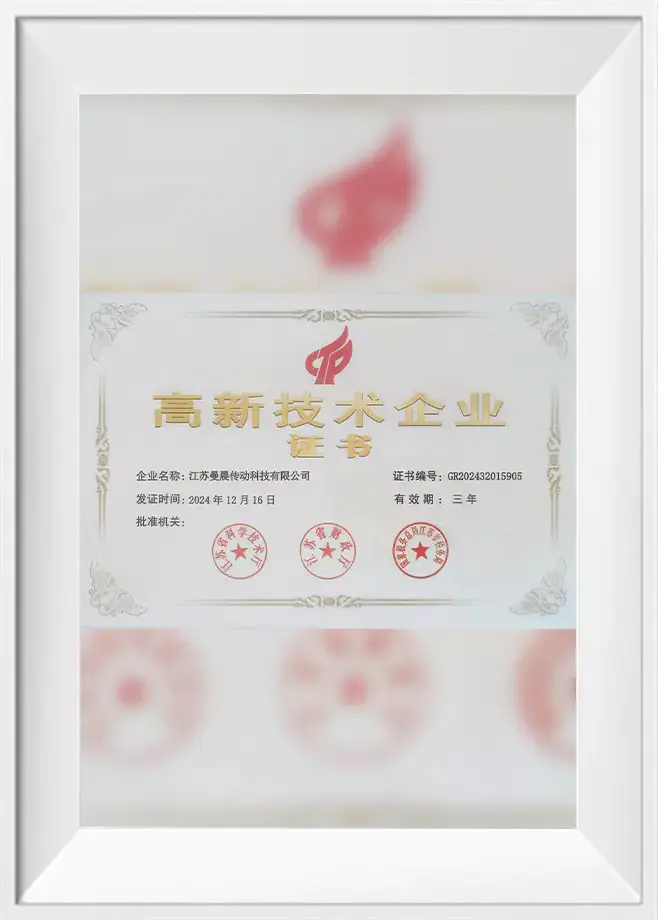
Our commitment to manufacturing reliability is verified by strict international testing and quality management systems.
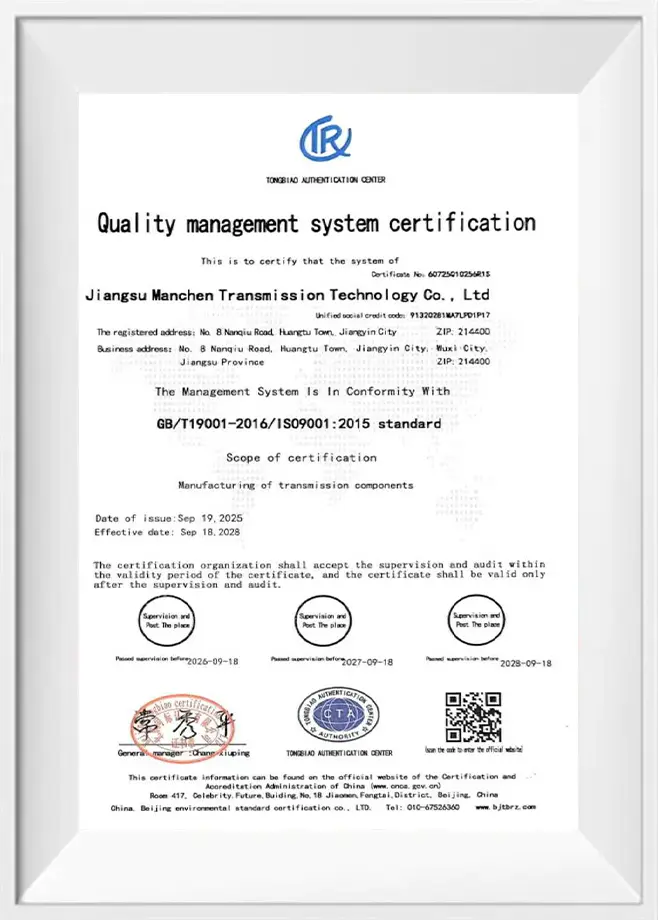
We provide customized design and technical support tailored to our partners' needs to ensure stable and efficient equipment operations.










CSP plants are typically constructed in zones characterized by High Direct Normal Irradiance (DNI), which frequently correlate with remote, arid deserts, high-altitude steppes, or wind-swept coastal flats. While these conditions maximize solar gain, they present severe challenges for structural and mechanical components.
In regions like the Sahara or the Gobi Desert, airborne particulate matter can migrate into the bearing raceways. This sand ingress leads to accelerated abrasive wear, increased rotational torque, and premature component failure. To prevent this, our designs utilize specialized multi-lip polyurethane or fluoroelastomer seals.
Desert temperatures can range from -30°C at night to over +50°C during the peak of summer. This broad range can cause uneven thermal expansion in matching steel structures. We mitigate this through precise clearance engineering, optimized heat treatment, and low-temperature synthetic greases.
Heliostats and parabolic collector mirrors expose large surface areas to wind gusts. When wind speeds spike, these structures experience significant overturning moments. Slewing bearings must support these combination radial, axial, and tilting moment loads to prevent tracking error or catastrophic structural failure.
Coastal desert zones (such as Chile's Atacama or Saudi Arabia's coastal sites) combine high atmospheric salinity with extreme UV radiation. This combination accelerates oxidation. To counter this, we apply corrosion-resistant paints, zinc-nickel plating, or thermal spray coatings to all exposed surfaces.
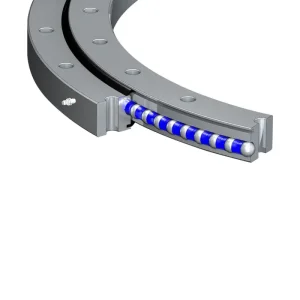
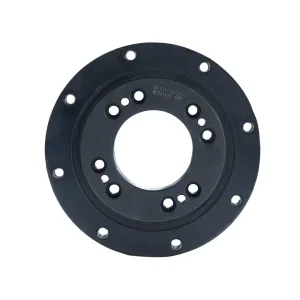
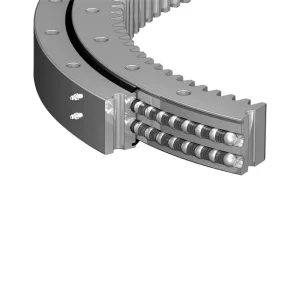
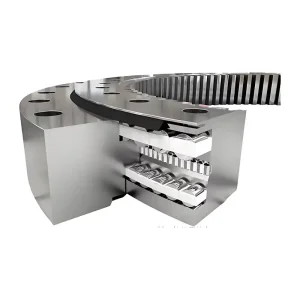
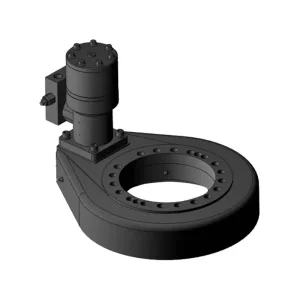
Selecting the correct bearing design depends on the tracking system architecture. Heliostat single-axis and dual-axis trackers typically use compact single-row ball slewing bearings or integrated vertical slewing drives. This provides a balance of axial load capacity and cost efficiency. For parabolic trough systems that support long collector loops, operators prefer external-gear or gearless cross-roller slewing bearings due to their high radial rigidity and minimal deflection under high loads. For heavy-duty solar tower heliostat bases, three-row cylindrical roller slewing bearings provide the necessary load capacity to support large mirror surfaces under heavy wind conditions.
Jiangsu Manchen Transmission Technology Co., Ltd. delivers comprehensive mechanical tracking solutions, moving beyond individual component supply. Through our OEM & ODM workflows, our engineering teams collaborate with solar tracker developers during the initial design phase. By using finite element analysis (FEA), we simulate real-world wind loads, tooth shear stresses, and raceway contact pressures to optimize raw material usage and bearing geometries.
This custom engineering approach helps balance cost and mechanical performance. For example, in large heliostat projects, reducing structural weight while maintaining high torsional stiffness directly lowers the cost of the supporting steel framework. This improvement reduces the levelized cost of energy (LCOE) for the plant operator.
Answers to common engineering questions regarding the design, operation, and maintenance of slewing bearings in concentrated solar power tracking systems.
Jiangsu Manchen Transmission Technology Co., Ltd. maintains long-term cooperative partnerships with leading domestic and international enterprises. Through reliable quality and responsive support, we have built a solid reputation in the renewable energy sector. We continue to focus on updating our transmission technologies, aiming to deliver high-quality, cost-effective rotary products and services to global solar industries.
 Manchen Transmission