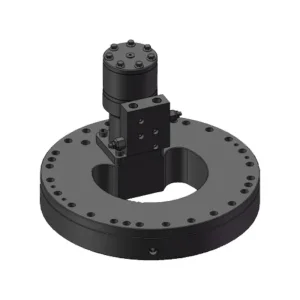
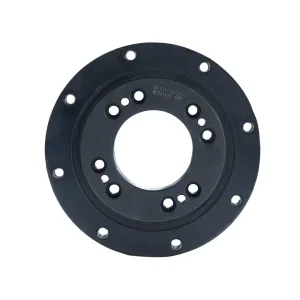
The global transition toward carbon neutrality has positioned Concentrated Solar Power (CSP) as a cornerstone of the next-generation energy mix. Unlike standard Photovoltaic (PV) technology, CSP systems utilize mirrors or lenses to concentrate a large area of sunlight onto a receiver. This thermal energy is then captured and converted to steam to drive conventional turbine generators, frequently integrated with Molten Salt Thermal Storage. This configuration enables continuous, dispatchable clean energy production, even during cloudy periods or after sunset.
According to modern energy market indexes, utility-scale CSP installations are expanding rapidly across regions with high Direct Normal Irradiance (DNI). Key hubs including the Middle East and North Africa (MENA), the desert regions of Southwestern United States, Spain, and North-Western China are deploying multi-megawatt tower and parabolic trough plants. A critical component determining the operational efficiency and lifetime capacity factor of these projects is the precision solar tracking drive system. The tracking mechanism relies heavily on high-precision slewing drives and swivel bearings to dynamically rotate solar concentrators to track solar paths, maintaining high optical concentration ratios throughout the day.
Rapid commercial scaling of CSP infrastructure is underway across high-direct-normal-irradiance (DNI) zones, specifically in the Gobi desert region of China, the MENA loop, and southwestern US networks.
High-precision tracking eliminates optical dispersion. The application of single-row and double-row four-point contact ball slewing bearings yields sub-milliradian positioning accuracy.
Concentrated Solar Power infrastructure faces harsh environmental demands. Rotary components must withstand heavy dust intrusion, wide diurnal temperature swings, and strong wind loads.
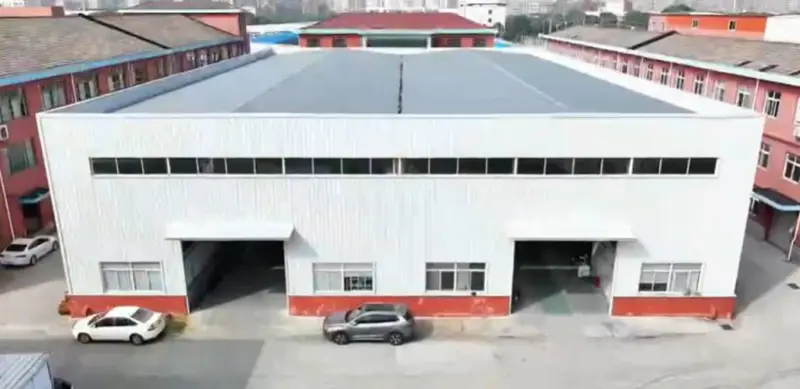
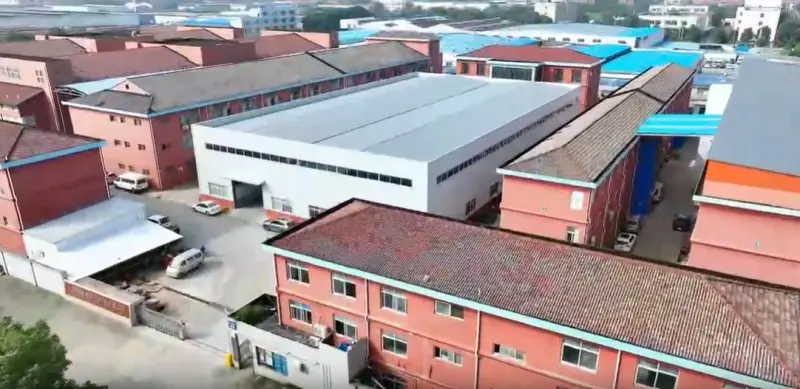
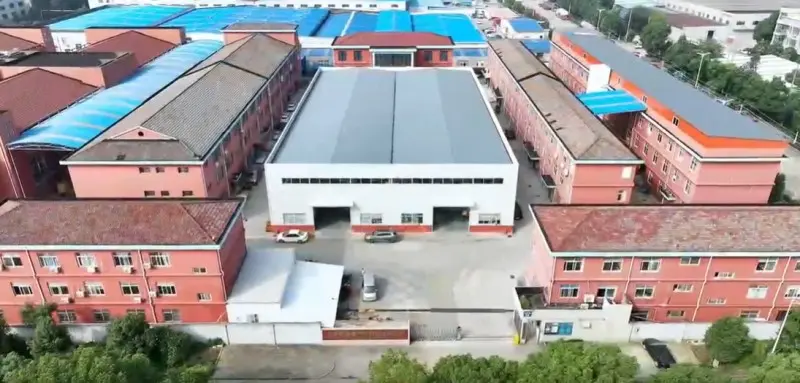
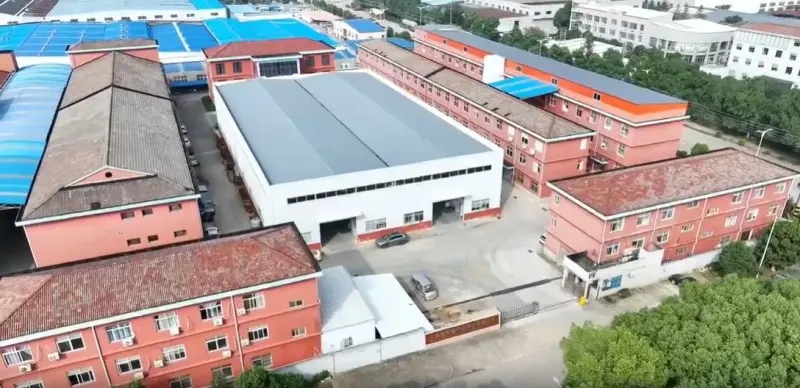
Established in 2022, Jiangsu Manchen Transmission Technology Co., Ltd. is a professional manufacturing enterprise integrating design, research and development, manufacturing, and sales. Located in Huangtu Town, Jiangyin City, Jiangsu Province, our facility benefits from convenient logistical networks and developed manufacturing supply chains.
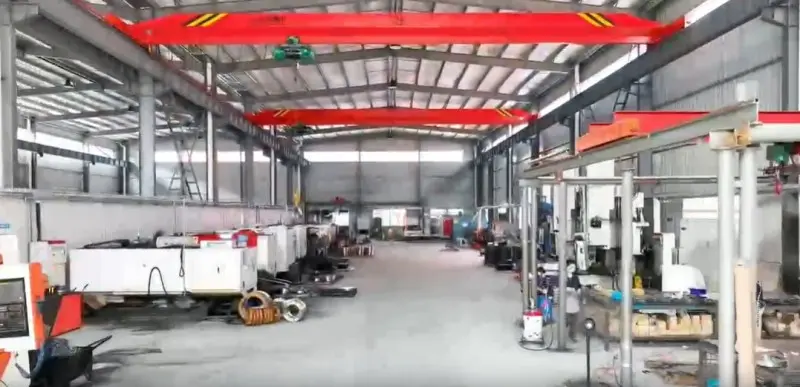
Relying on specialized forging, heat treatment, and precision processing techniques, we deliver high-load-bearing, high-strength, and long-life transmission solutions tailored for solar trackers, construction machinery, medical equipment, intelligent warehousing, the port machinery sector, industrial robotics, and environmental protection equipment. Our manufacturing infrastructure is equipped with advanced testing devices and an end-to-end quality control system. All products offer full traceability from raw material selection to final delivery, complying with domestic and international industry quality standards.
Following our core business philosophy of "quality first, mutual cooperation", we provide reliable products and engineering services to clean energy developers and heavy machinery manufacturers worldwide.

We offer customized design and technical support tailored to specific operational requirements. Our industrial transmission solutions utilize a structured manufacturing process to maintain consistency and durability under challenging field conditions.

Ultrasonic flaw detection checks for internal defects in alloy structural steels (50Mn, 42CrMo).

Ring rolling and press forging refine the grain structure, increasing dynamic load capacity.

CNC turning sets the baseline geometry, creating profiles for raceways and gear teeth.

Induction hardening of raceways controls hardness depth, optimizing wear resistance.

Relieves residual stresses from heat treatment, ensuring long-term dimensional stability.

CNC profile grinders finish the raceway to micrometer tolerances, minimizing rotational torque.

High-precision gear shaping ensures uniform tooth contact, reducing tracking play.

Corrosion protection via phosphating, zinc plating, or marine-grade polyurethane coatings.

Integrates steel balls, spacers, and sealing rings, setting radial and axial clearances.

Verifies torque, play, and runout before preservation packing for international transport.
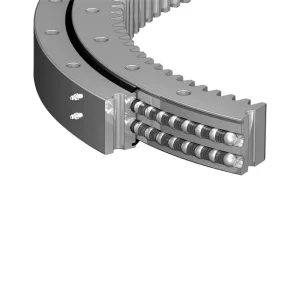
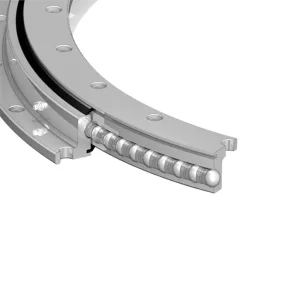
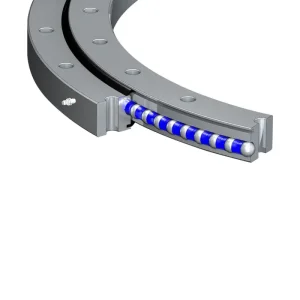
Industrial solar trackers must operate reliably under sustained static loads, dynamic wind buffering, and high overturning moments. The selection of bearing configurations is determined by the mechanical demands of the system:
Designed with two concentric raceways holding steel ball sets. This configuration distributes high vertical axial loads and radial forces across multiple contact surfaces. It is used in dual-axis solar trackers and heavy crane applications that require stable operation under large moment loads.
A common configuration featuring a single ring of steel balls with four-point contact geometry. This design balances load capability, rotational friction, and manufacturing cost, making it suitable for single-axis horizontal PV trackers and compact CSP parabolic collector supports.
Equipped with cylindrical rollers arranged orthogonally (crossed) at 90-degree angles to each other in the V-shaped raceway. This configuration achieves high rigidity and minimal elastic deformation under multi-directional loading, making it suitable for high-accuracy applications.
In utility-scale energy projects, tracking hardware operates under challenging environmental conditions. Outdoor installations face desert sandstorms, coastal humidity, and wide temperature variations. Jiangsu Manchen's product designs incorporate specific features to maintain performance in these environments:
Fine airborne dust particles in desert areas can contaminate lubricants, leading to abrasive wear. Our assemblies utilize double-lip nitrile rubber (NBR) or fluororubber (FKM) sealing systems, combined with synthetic greases, to prevent dust ingress and resist degradation from UV exposure.
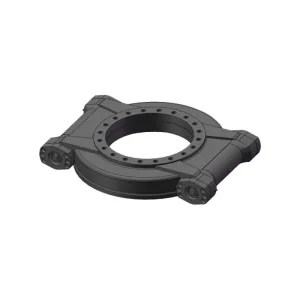
Solar collectors present large profiles that generate significant aerodynamic drag during high winds. Our slewing drives are designed with high static holding torque and locking capacity to prevent back-driving, keeping the structural arrays stable in high winds without motor slippage.
For coastal installations and industrial settings, components are finished with hot-dip galvanizing, Dacromet, or multi-layer marine epoxy systems. These treatments satisfy C4 or C5 corrosion class specifications, protecting the underlying steel from premature oxidation.
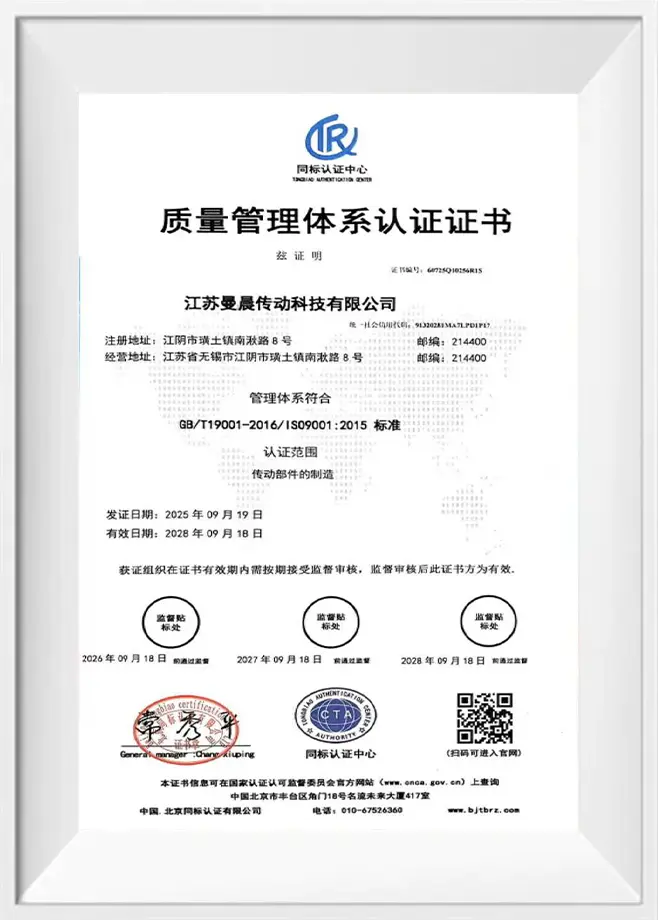
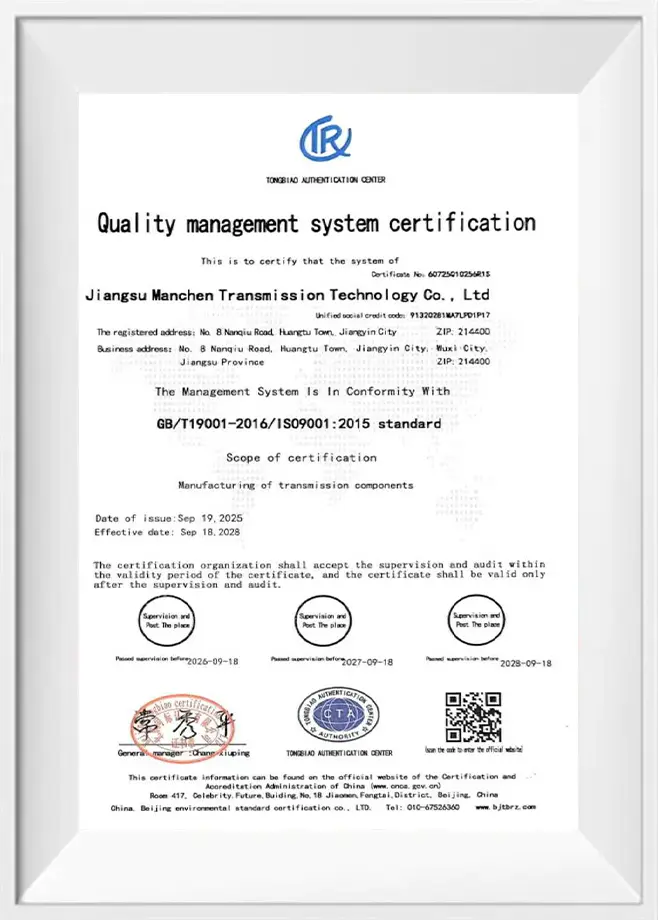
We manage our manufacturing processes under a structured quality management system. The traceability of every component, from raw material selection to final testing, ensures consistent product quality for domestic and international projects.
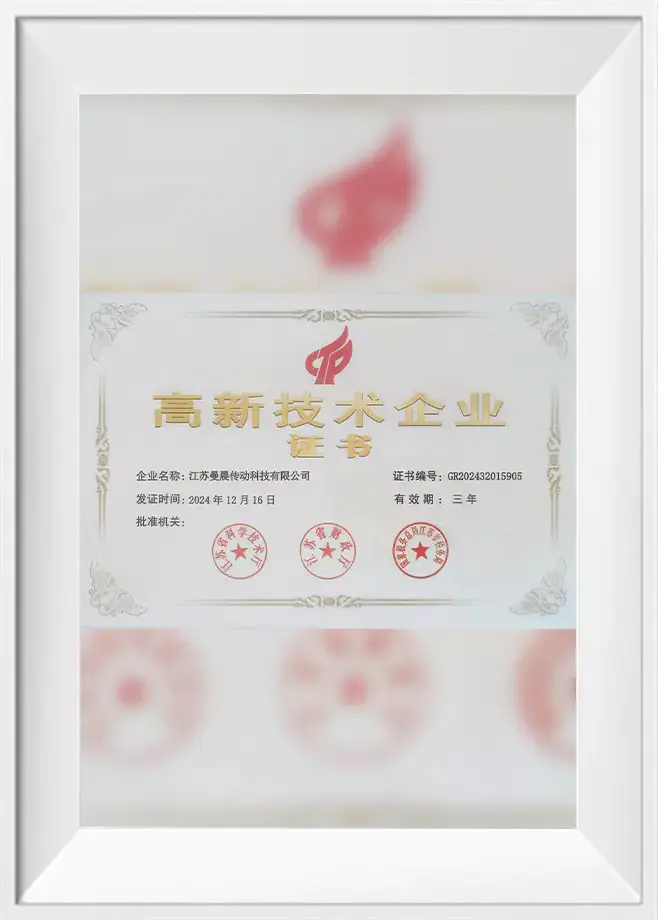
Quality Management System Certification
Environmental Compliance Certification
Occupational Health & Safety Verification
As renewable energy networks integrate digital control and AI diagnostics, tracking hardware is adapting to support smart operations. The development plan for next-generation slewing systems focuses on three main areas:
Integrating vibration sensors, temperature probes, and continuous wear-monitoring systems directly into the slewing bearing housing. This allows plant operators to gather real-time performance data and plan preventative maintenance, reducing unplanned downtime.
Developing biodegradable, high-viscosity synthetic lubricants designed to handle extreme temperature variations without shearing. These grease formulas reduce friction loss and extend replenishment cycles to up to 10 years, lowering operational costs.
Designing double-enveloping worm drives and pre-loaded rollers to reduce backlash to near-zero levels. This precision prevents aerodynamic flutter in solar collectors, protecting tracking structures during high winds.
Technical information regarding CSP transmission configurations, customization capabilities, and field performance.
 Manchen Transmission